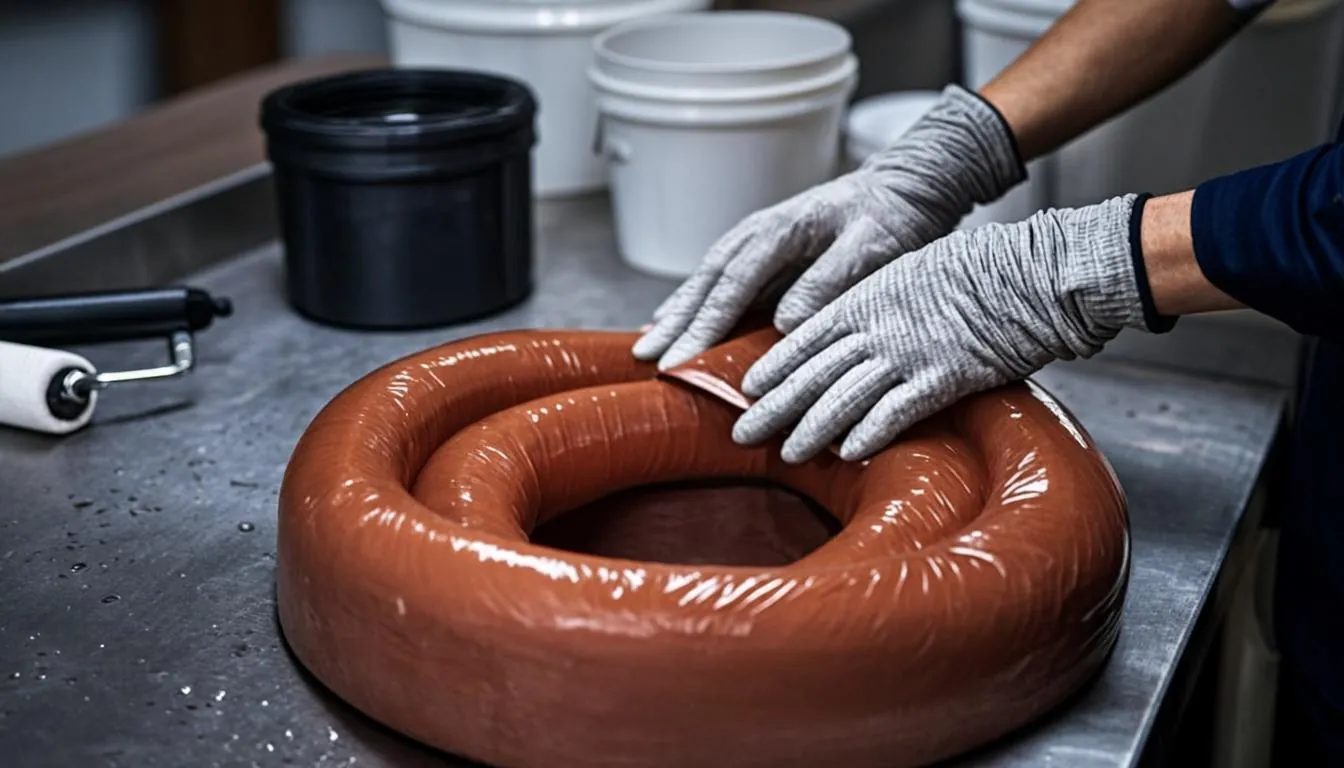
Most sewer lines do not fail everywhere at once. They fail at one joint, one cracked section, one spot where a root forced a gap open or the ground shifted a pipe out of alignment. Paying to replace, or even fully reline, an entire 60-foot lateral because three feet of it failed is the most expensive way to solve a localized problem. Trenchless sectional point repair is the right-sized answer: a short structural liner, as little as 3 to 10 feet long, installed from inside the pipe at the exact defect, sealing it permanently while the rest of the sound pipe stays exactly as it is.
Beverly Sewer & Drain performs sectional point repairs across Beverly and Essex County from camera-verified measurements, so the patch goes precisely where the damage is and nowhere else. If your inspection footage shows one bad joint in an otherwise sound line, call (978) 286-4881 for a free spot repair estimate, and see how much of the full-replacement quote you never have to spend.
What Is Trenchless Sectional Point Repair?
A sectional point repair installs a fiberglass mat saturated with structural epoxy resin inside the existing pipe, covering only the damaged section. The patch is typically 3 to 10 feet long, sized to the defect plus engineered overlap on both sides. Once positioned, the liner is inflated against the pipe wall and cured in place, hardening into a smooth, jointless structural section that becomes, in effect, a brand-new pipe segment inside the old one.
The restored section is load-bearing: it meets the same structural standards as a full cured-in-place liner, resists root intrusion through its seamless surface, and seals cracks, offset joints, and small holes completely. What it does not do is touch the rest of your pipe. That selectivity is the entire economic point: you buy the feet of pipe that actually failed, not the feet that did not.
When Is Spot Repair the Best Option?
The camera footage decides, and these are the conditions where the sectional patch wins decisively:
- One failed joint or crack in a pipe that is otherwise sound. The classic Beverly scenario: a 50-year-old clay line with a single root-invaded joint, everything else holding grade and structure.
- An isolated root-damaged section after root removal, where the roots cracked one segment and the remaining joints are intact.
- A single leak or offset joint flagged during a real-estate scope, where a fast, targeted fix restores the line's integrity before closing.
- Budget-priority repairs, where the savings matter: a sectional repair typically runs 40 to 60 percent below the cost of lining or replacing the entire line, because materials, time, and restoration all scale with footage.
Spot repair is not right for every pipe. A line failing at many joints along its length is better served by a full liner; a collapsed or deformed section needs pipe bursting instead; and a severely back-pitched or bellied run needs excavation. We will show you the footage and explain, in plain language, why your pipe qualifies or does not. Selling a spot repair to a pipe that needs more, or a full replacement to a pipe that needs a patch, are both failures we refuse to commit.
| Pipe Condition | Best Fix | Why |
|---|---|---|
| Single failed joint, pipe otherwise sound | Sectional point repair | Seals the defect only; lowest cost, smallest disruption, one visit. |
| Root-cracked section after root removal | Sectional point repair | Restores the cracked segment before roots re-enter the wound. |
| Failures at many joints along the run | Full CIPP lining | One continuous liner renews the entire interior at once. |
| Collapsed or crushed section | Pipe bursting | Fractures the failed pipe outward and pulls new HDPE through. |
| Severe belly or back-pitch | Excavation & re-grade | Grade must be physically re-established; no inside fix can re-slope a pipe. |
The Installation Process, Step by Step
Measure and prepare the patch
The camera pass locates the defect by footage distance. The epoxy-saturated fiberglass patch is cut to size and wrapped around a deflated air bladder (packer), then folded and positioned for insertion through the cleanout or a small access point.
Position, inflate, and press
Guided by the camera and the measured distance, the packer carries the patch to the exact defect and is inflated to firm pressure, pressing the epoxy liner tightly against the pipe wall around the full circumference.
Cure, deflate, and verify
The resin cures in place, hot-water or ambient depending on the product, hardening into the structural section. The bladder deflates and withdraws, a final camera pass verifies the seal and smooth flow, and the line goes back to work the same day.
Most sectional repairs complete in a single visit, accessed through an existing cleanout with zero excavation. Where access requires a small targeted dig, the locate data from our mapping service shrinks the pit to the minimum possible footprint, and the surface is restored the same day.
What Does a Trenchless Sewer Repair & Lining Cost?
Sectional point repair is the most economical structural fix in the industry, and the pricing logic is transparent: materials and labor scale with the feet of liner installed, so a 6-foot patch prices at a small fraction of a 60-foot liner, which itself runs $4,000 to $9,500 for most Beverly laterals. Every quote is built from the camera footage, liner footage, diameter, access method, and verification, and issued as one engineered number before work starts. When a full replacement is genuinely unnecessary, this page is usually where the savings live.
| Repair Option | Typical Range | What Moves the Price |
|---|---|---|
| Sectional point repair, single defect (up to ~10 ft patch) | $1,500 – $3,500 | Depth, pipe diameter, and whether a cleanout provides access. |
| Each additional defect patched on the same run | $750 – $1,500 / section | Shared setup and mobilization lower the per-patch cost. |
| Spot repair with a small targeted access dig | +$500 – $1,500 | No usable cleanout; pit digging and same-day surface restoration included. |
| Full CIPP lining, whole run (for comparison) | $4,000 – $9,500 | Liner footage, depth, and the number of connection reinstatements. |
| Pre-repair camera inspection | $250 – $500 | Credited in full toward the repair when it is booked with us. |
And when the rest of the line eventually ages out, or the damage turns out to be bigger than the footage suggested, the escalation path is already mapped: trenchless pipe bursting for collapsed runs, or traditional sewer line excavation when the grade itself has failed. The patch you buy today never works against the fix you might need tomorrow.