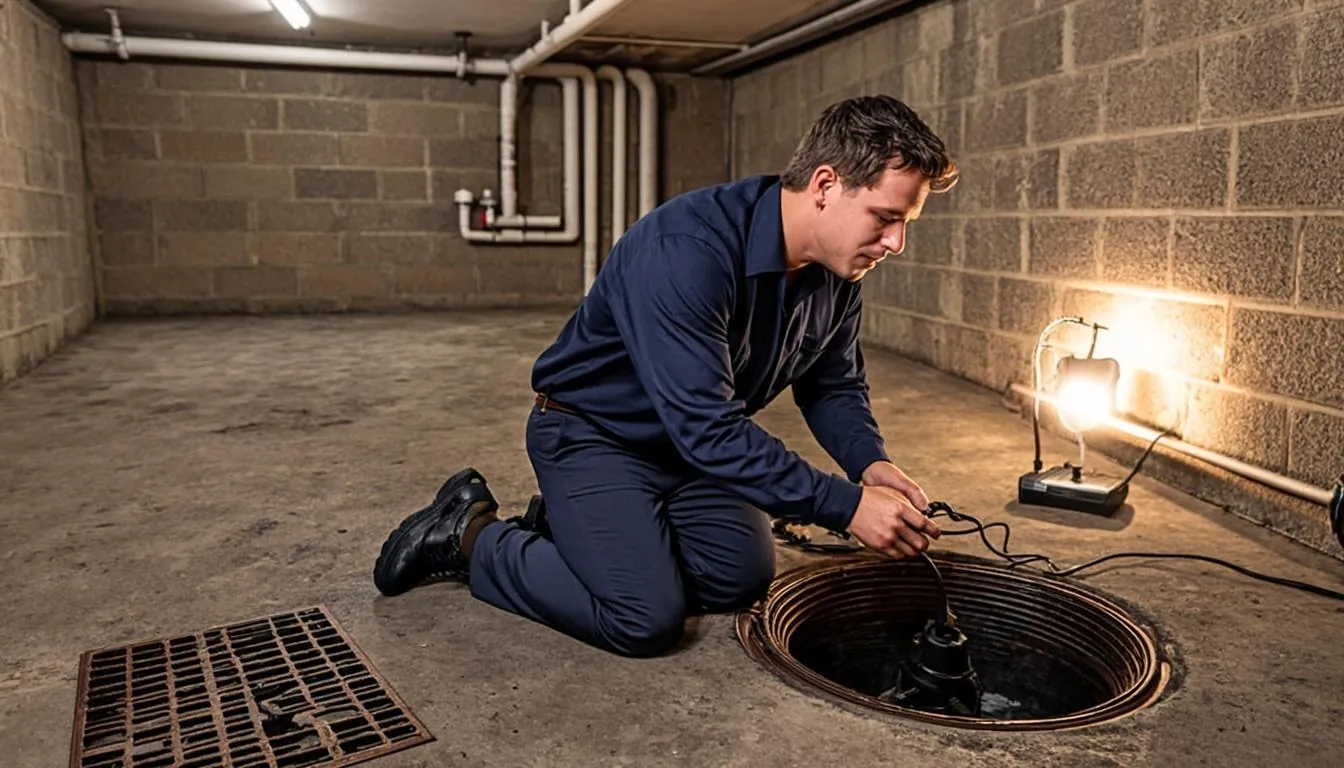
In Essex County, basement water is not a matter of if; it is a matter of when. Nor'easters, spring thaw, coastal groundwater around Salem Sound, and summer cloudbursts all push water toward the lowest point of your home, and the two systems standing between that water and your finished basement are the basement floor drain and the sump pump. Both are ignored until the storm that tests them arrives, and both fail in ways that are almost entirely preventable with routine maintenance.
Beverly Sewer & Drain keeps Beverly basements dry with professional floor drain unclogging, complete sump pump and discharge line service built for Massachusetts weather, and backwater valve installation. Whether your basement has never flooded and you want to keep it that way, or it floods every spring and you want to know why, call (978) 286-4881 and schedule a pre-storm-season checkup.
Common Causes of Basement Floor Drain Backups
The floor drain is the downstairs dumping ground for everything gravity delivers, and its blockages have a recognizable cast of characters. The most common causes we clear in Beverly basements:
- Sediment and silt accumulation. Seepage during wet weather carries fine soil into the drain, where it settles and layers year over year until the channel is half the diameter it was.
- Soap scum and laundry residue. Detergent film, lint, and softener residue coat the drain body and the line below it exactly the way they coat a laundry standpipe.
- Mineral scale and rust flakes. Hard-water scale and corrosion from aging water heaters and supply lines narrow older cast-iron drain bodies progressively.
- Root intrusion from the lateral side. Fine roots that entered a lateral joint grow back toward the house and surface right at the floor drain connection.
- Storm backflow from the main. During heavy rain, snowmelt, or a surcharged city main, water pushes backward into the lowest fixture in the house, which is the floor drain. This one is a system-pressure problem, not a clog, and it has a different fix (more on backwater valves below).
The trap below the drain adds its own signature problem: a dried-out P-trap seal. If months pass without water flowing through the drain, the trap water evaporates and sewer gas rises into the basement, the rotten-egg odor homeowners often misdiagnose as a leak. Pour a gallon of water into the drain to test the theory; if the odor fades, the diagnosis is confirmed, and a simple trap primer stops it from recurring. Odor is a maintenance signal, not a structural emergency, but it deserves a quick professional look to confirm which.
Clearing Sump Pump Discharge Lines
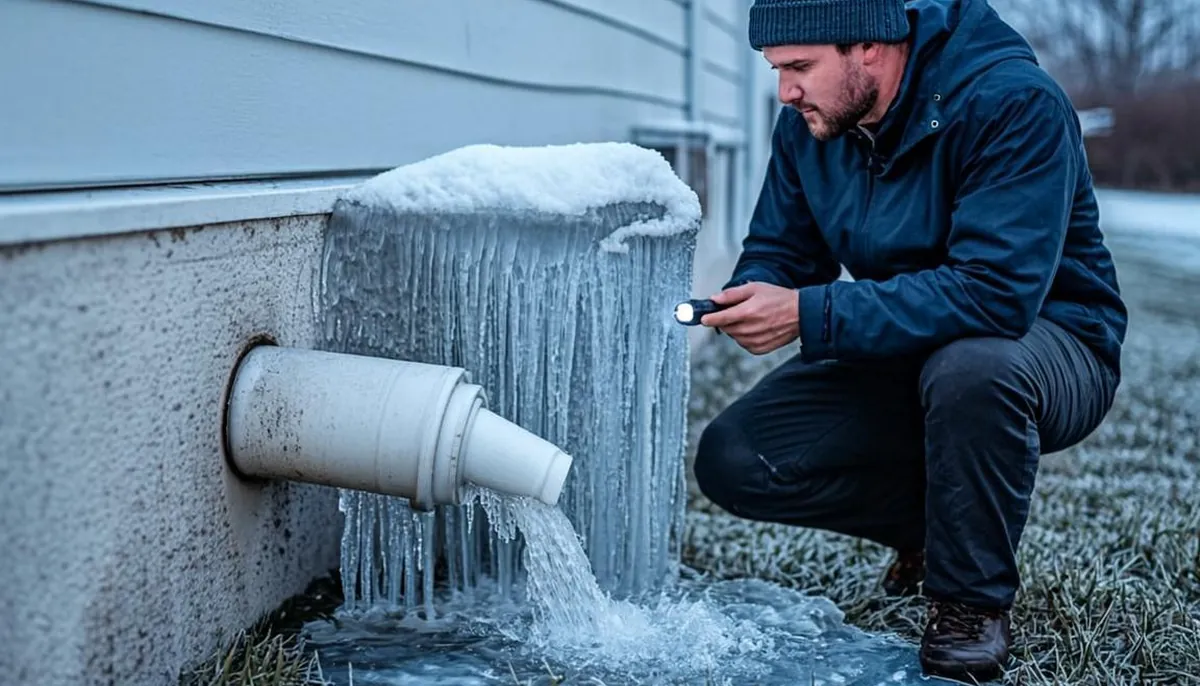
A sump pump is only as good as the pipe that carries its water away, and discharge lines fail in two distinctly Massachusetts ways. The first is freezing: an exposed or shallow-buried discharge line turns into an ice plug during a cold snap, and the pump then runs uselessly against a sealed pipe exactly when the winter thaw or a mid-winter flood arrives. The second is blockage: sand and soil washed in from the pit, roots that found the buried line's joints, or a crushed section under a driveway, all of which strangle the flow the pump depends on.
Our discharge-line service covers the full path from pit to daylight: the pit and screen are cleaned so sediment stops short-cycling the pump, the check valve is tested so discharged water cannot flow back, and the line itself is jetted or cleared to its discharge point. Where the line's routing or exposure invites a repeat freeze, we re-route, deepen, or insulate the vulnerable section as part of the visit. For finished basements and low-lying properties we also recommend battery backup pumps, because the storm that floods your basement is frequently the same storm that takes the power out.
Installing Backwater Valves for Ultimate Flood Protection
Some basement floods do not come from your own plumbing at all. During heavy rain, municipal sewer mains can surcharge: the city system fills faster than it can drain, and the pressure pushes backward through laterals, arriving in the lowest fixtures and floor drains of connected homes. Low-lying streets in Beverly Cove and other coastal and river-adjacent neighborhoods see this pattern in the worst storms, and no amount of sump pumping stops water that is being pushed in from the street side.
A backwater valve is the engineered answer: a one-way valve installed on the lateral that allows wastewater to flow out toward the main but seals shut when flow reverses. For flood-prone properties it is the difference between a wet yard and a wet basement, and it pairs naturally with the sump system, which handles groundwater while the backwater valve handles municipal surcharge. Installation is a plumbing project we handle end to end (permits, access work, installation, and inspection coordination), and it is the upgrade we recommend most often to homeowners in the neighborhoods that flood first.
A Seasonal Maintenance Calendar for Beverly Basements
Basement protection is calendar work, because each Essex County season brings a different failure mode. This is the schedule we recommend, and can perform, for most Beverly homes:
| Season | What to Do | Why It Matters |
|---|---|---|
| Spring | Full sump pump test and pit cleaning; floor drain check; verify discharge line survived winter; watch performance during thaw. | Melting snow and spring rain are the highest-load period; winter-damaged lines fail exactly now. |
| Summer | Quick float test after major storms; check for odor indicating a dry trap; schedule any deferred repairs. | Cloudbursts load systems suddenly; dry weather evaporates trap seals. |
| Fall | Pre-winter service: discharge line insulation, battery backup test, gutter and grading check, floor drain cleaning. | Preparation done in autumn is what survives the first deep freeze and nor'easter. |
| Winter | Watch discharge line for ice; keep the pump pit from freezing; test after extended cold snaps. | Frozen discharge lines make pumps run uselessly during mid-winter floods. |
Homeowners who follow this rhythm rarely meet us for the first time at 2 a.m. They meet us on a quiet weekday afternoon, when repairs are scheduled, priced calmly, and finished before the weather that would have exposed the problem. If water is already rising as you read this, our emergency main sewer backup response covers the midnight protocol; if the basement has a history, start with a camera inspection and let the footage set your priorities.
What Does Floor Drain & Sump Line Service Cost?
| Service | Typical Range | What Moves the Price |
|---|---|---|
| Full Maintenance Visit | Routine service range | Pump test, pit cleaning, discharge and check valve inspection, floor drain clearing. |
| Emergency Floor Drain Clearing | $150 – $350 | Blockage severity and access. |
| Sump Discharge-Line Jetting or Clearing | $400 – $900 | Line length, freeze or root blockage severity, and routing. |
| Sump Pump Replacement / Battery Backup | Flat project quote | Pump model, pit condition, and backup configuration. |
| Backwater Valve Installation | Flat project quote | Access method, permitting, and inspection coordination. |
How this service fits with the rest of the system, main line health, root prevention, and the diagnostics behind it all, is covered on Beverly sewer line repair & drain cleaning. The storm you prevent is always cheaper than the one you pump out.