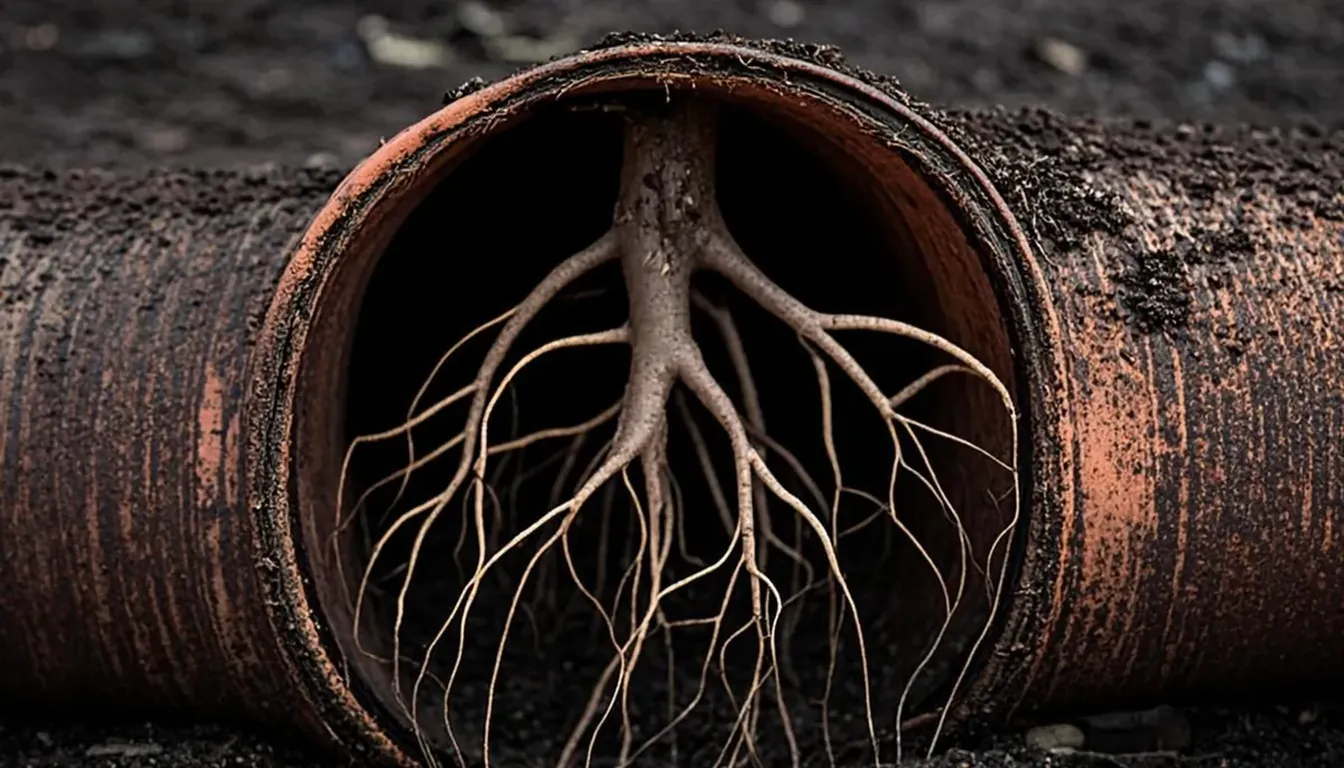
Beverly is a city of big, beautiful trees. Mature oaks and maples line the streets of Ryal Side, Beverly Cove, and North Beverly, and those same trees quietly run their roots into the sewer lines beneath them. Roots seek exactly what an aging pipe offers: moisture and nutrients leaking through joints in pre-1970 clay and cast iron pipe. Once inside, a few hair-thin root fibers become a dense root mass that catches paper, blocks flow, and eventually cracks the pipe open.
Beverly Sewer & Drain specializes in tree root removal from sewer lines in Beverly, MA: cutting and jetting the roots out, treating the pipe interior to slow regrowth, and, most importantly, sealing the entry points so the problem stops repeating. If your drains slow down every spring and summer, call (978) 286-4881 and let us show you what is really growing down there.
How Tree Roots Enter and Destroy Underground Sewer Pipes
Root systems are constant water-seekers, and a sewer line is the most reliable water source in your yard. Even a sound pipe releases small amounts of vapor through joints, and in older clay and cast iron systems, the standard in most Beverly homes built before 1970, the joints are numerous and the seals are decades old. Local oaks (Quercus) and maples (Acer), the signature canopy trees of the North Shore, are among the most persistent probes: their root systems extend well past the drip line and follow the moisture gradient straight to the weakest joint in the run.
Inside the pipe, the environment is paradise: continuous water, warm temperatures, and nutrients in the wastewater itself. The rootlets thicken into fibers, the fibers tangle into a mat, and the mat expands year after year, forcing the joint apart wider with every season. Left alone, the cycle ends the way every old clay line's story ends: a cracked segment, a collapsed run, and wastewater leaking into the soil, at which point the conversation shifts from cleaning to structural repair.
Warning Signs of Root Intrusion
Roots produce a recognizable pattern of symptoms, especially the seasonal rhythm that separates root problems from simple misuse. Watch for these indicators around your Beverly home:
- Drains that slow down and clog on a seasonal cycle, typically worsening in spring and summer when root growth peaks.
- Gurgling toilets and multiple slow fixtures together (the main line signature) combined with yard symptoms.
- A section of lawn over the line that is unusually lush, green, or fast-growing, fed by wastewater escaping through root-split joints.
- Soggy patches or soft ground between the house and the street, even in dry weather.
- Clogs that return within weeks of snaking, because the root mass the cable punched through regrows into the opening immediately.
- A mature tree or large shrub standing within roughly 10 to 30 feet of the suspected pipe route. The two facts are rarely unrelated.
None of these symptoms alone is a definitive diagnosis, and that is precisely the point: guessing at roots and repeatedly paying for cable runs without treating the cause is the most expensive possible way to manage the problem. One HD video sewer camera inspection converts the suspicion into visual proof, measured depth and location, and a specific plan.
The 3-Step Complete Root Elimination Strategy
Effective root removal is a sequence, not a single tool, and each step exists because the step before it cannot finish the job alone:
Cutting: open the channel
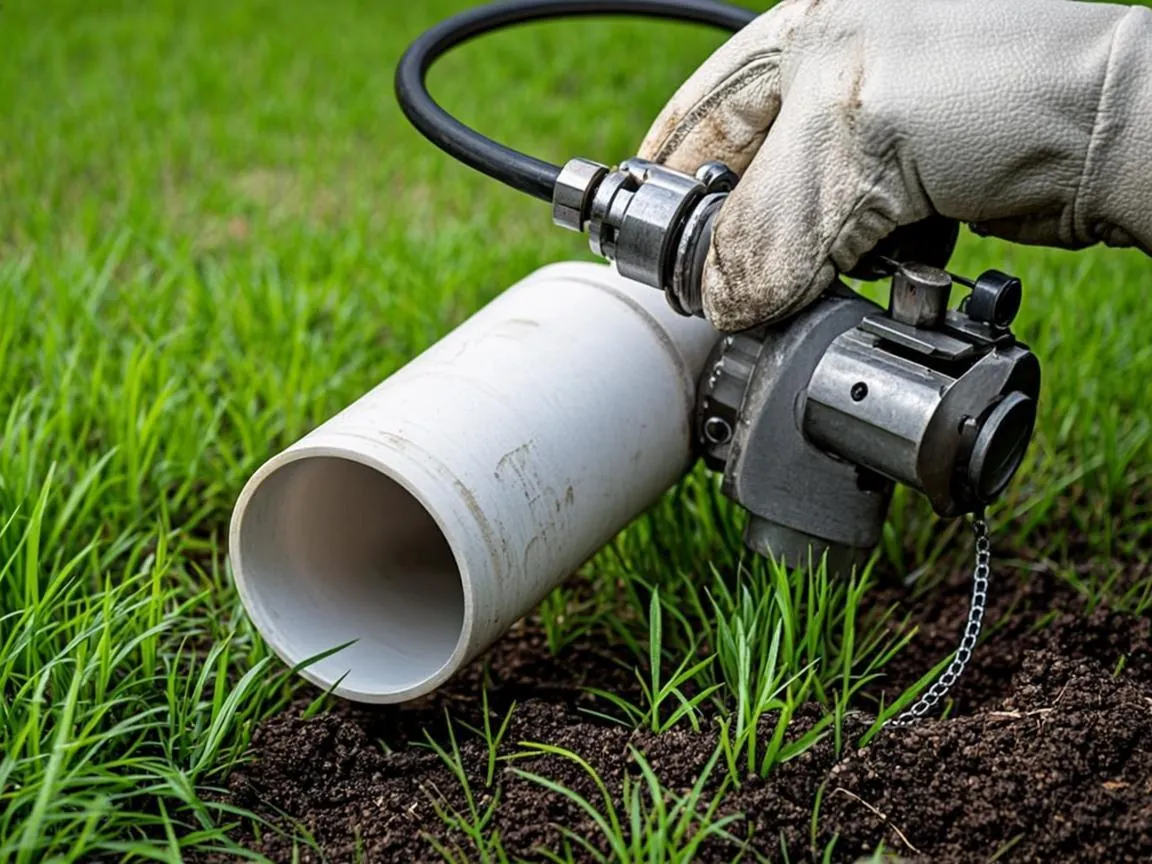
Professional root-saw heads on sectional cable machines, followed by hydro-jetting, tear through established root masses and flush out the fibers and sludge the cutting leaves behind. Cutting opens the channel; jetting cleans the full pipe wall down to sound material, which is what separates a lasting clear from a two-week reprieve.
Chemical treatment: slow the regrowth
With the line clear, we apply a professional foaming root inhibitor that coats the pipe interior and the remaining root tissue, killing what is inside the pipe and inhibiting regrowth at the invaded joints while leaving the tree itself unharmed above ground. The foam clings to the walls and root stubs instead of washing through, which is what gives it its lasting effect.
Structural lining: seal it permanently
The step that ends the cycle: a non-invasive trenchless pipe lining or a full cured-in-place liner seals the cracked joints and entry points from inside the pipe, so the roots find no gap to probe ever again. No excavation, no damage to the tree's root zone, and a restored pipe with a service life measured in decades.
Most Beverly homeowners who call us are somewhere in the middle of the cycle: the clogs have become predictable, but the pipe still holds. That is the ideal window for the full sequence, because all three steps can be completed from inside the pipe without any excavation at all.
Why Cutting Roots Alone Always Fails
Mechanical cutting without treatment and sealing is like mowing a lawn without addressing the soil: the roots are still alive, the entry point is still open, and the moisture signal is still broadcasting. Root tissue regrows through the same joint, often denser than before because cutting stimulates branching, and most untreated lines re-block within six to twelve months of the next growing season. This is the mechanism behind the familiar cycle of paying for a root cutting every year or two, forever, without the problem ever actually being solved.
The honest way to break the cycle is to close the entry point. Until the joints the roots are using are sealed, every clearing visit is maintenance, not repair. We are equally honest about the other side of that coin: if your line is otherwise sound and the intrusion is early-stage, a disciplined cut-jet-treat program can manage it affordably for years. The camera footage decides which path your pipe qualifies for, not a sales script.
Protecting Your Trees While We Protect Your Pipe
Beverly homeowners love their trees, and so do we: the goal of professional root treatment is to save both the landscape and the pipe. Foam treatment acts inside the pipe and at the joint line only; it does not travel into the surrounding soil in any concentration that could damage the tree, which is why municipalities and utilities across the country have used the same chemistry for decades in root-prone systems. The tree keeps its canopy; your sewer keeps its flow.
When a future planting or renovation is on your calendar, we also help you avoid planting the next problem. Fast-growing, water-hungry species (willows, silver maples, poplars, and elms among them) are the most aggressive sewer-line invaders and should never be planted over or beside a lateral. Choosing sewer-friendly species and locating them with a pipe map before planting is a small step that prevents the entire cycle from starting over on your property.
What Does Tree Root Removal Cost in Beverly?
| Service | Typical Range | What Moves the Price |
|---|---|---|
| Mechanical Root Cutting & Clearing | $150 – $350 | Root mass density, depth of the blockage, and length of run. |
| Hydro-Jetting for Root Sludge & Fibers | $400 – $900 | Pipe diameter and how much fiber mat must be stripped from the walls. |
| Foam Root Treatment | Quoted with service | Line length and the number of invaded joints being treated. |
| Camera Inspection (before/after) | $250 – $500 | Credited toward any lining or repair project that follows. |
| Permanent Seal: Trenchless Lining | $4,000 – $9,500 | Liner footage, diameter, and reinstated connections. |
Where root work fits among the other services, and how the whole system is maintained, is covered on Beverly sewer line repair & drain cleaning. If the roots have already cracked or collapsed the run beyond lining, the comparison between trenchless pipe bursting and traditional sewer line excavation on those pages will tell you exactly how the fix works.