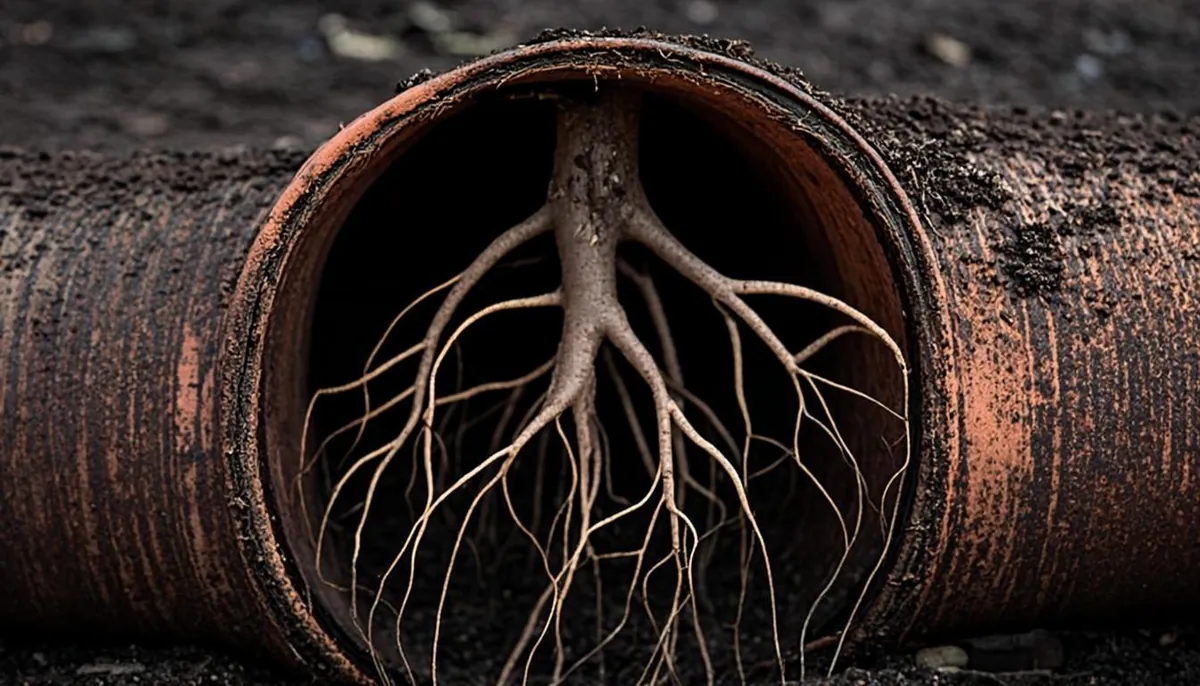
Tree roots are the single most destructive force most home sewer lines ever meet, and they find your pipes on purpose. Understanding the mechanics explains why roots keep returning after every snaking, why certain trees are repeat offenders, and what actually ends the cycle for good.
How Roots Find a Buried Pipe
Root systems hunt moisture, and a sewer lateral is the most reliably moist thing in the soil. Vapor escapes continuously from pipe joints and hairline cracks, and fine feeder roots follow that humidity gradient from feet away. Once a root tip reaches the joint, it threads in. Inside, the environment is perfect: constant moisture, nutrients, and darkness. The root thickens year over year, and other roots follow the first one in, exactly the way they would colonize a streambed.
Why Old Clay and Iron Lines Invite Them
Pre-1970 laterals were assembled in short sections with gasketed or mortar joints, and every joint is a door. Clay is especially inviting: the barrels are short, so a typical Beverly backyard run has a dozen or more joints for roots to probe. Cast iron fails differently, corroding until the interior roughens and cracks open along the seam. Either way, the tree outside does not need to break anything; the pipe's age already opened the door, and roots are just the ones walking through it.
The Failure Timeline
Year one: fine roots mat inside the joint, catching paper and solids. Flow slows; the clog clears with a snake; everyone relaxes. Years two and three: the root ball thickens, secondary roots arrive, and snaking intervals shorten. The expanding root mass also works the joint wider as it grows, which is how a maintenance problem becomes a structural one. Eventually the ball chokes the pipe outright, or the widened joint starts leaking effluent into the soil and softening it until a belly forms. Every stage of that story is visible on camera before it is visible in the basement.
What Ends the Cycle
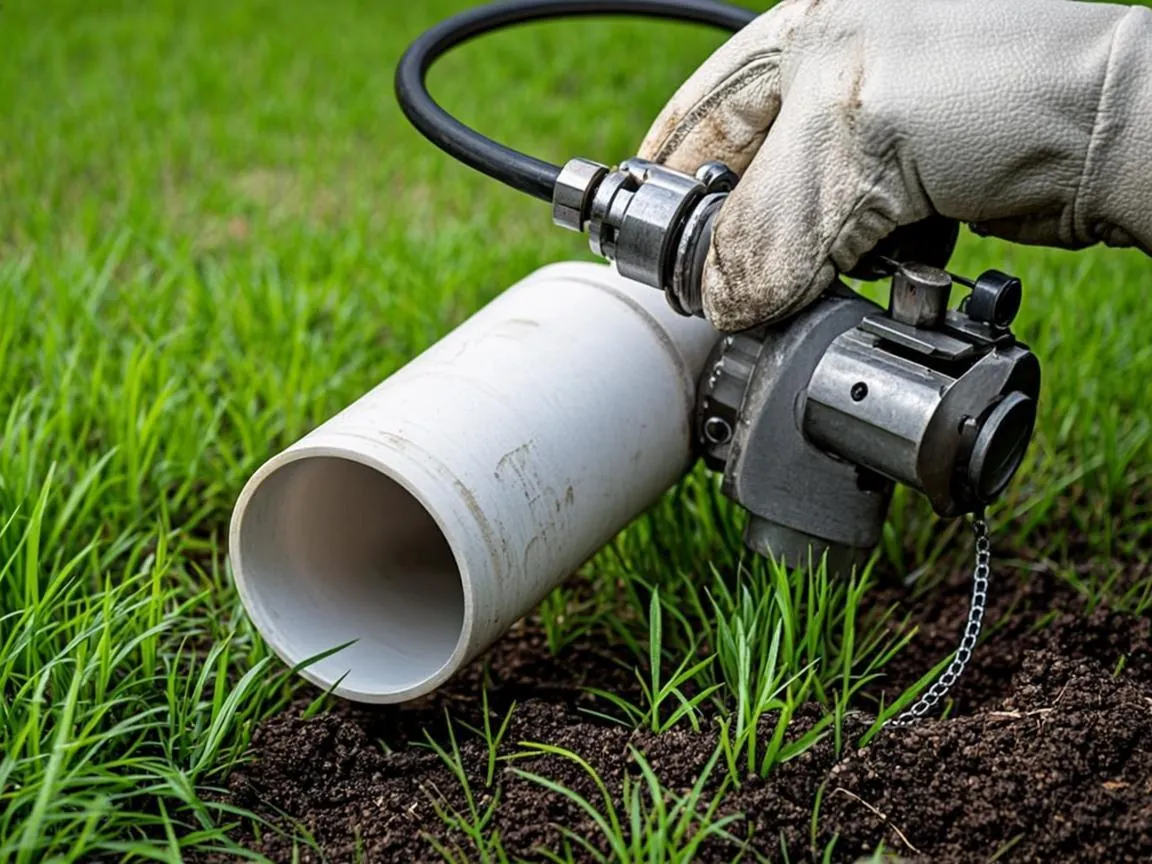
- Cut the mass properly. Jetting with a root-cutting head shears roots flush to the wall along the whole run, not just a pilot hole at one joint.
- Verify on camera. The footage shows how many joints were involved and whether any structural damage has started.
- Seal the doors. A cured-in-place liner covers the joints with one seamless surface. No joint, no entry point, no repeat. This is the step that ends the four-month snaking ritual permanently.
- Choose future plantings wisely. Keep water-hungry species a sensible distance from the known pipe path; the scope report marks exactly where that is.
The Two-Step Fix in Practice
The combined jet-then-line sequence is the definitive root cure, and both halves live in our service pages: start with hydro-jetting to strip the roots out, then line the pipe so the joints disappear. Homeowners who stop at step one get a clean pipe and an appointment reminder on the calendar; homeowners who finish step two get to forget the whole topic for a few decades. Our dedicated tree root removal service runs the whole cycle in one visit: cut the mass, jet the wall, treat the pipe, and seal the entries it came through.
Quick Answers
How do tree roots get into a sealed sewer pipe?
They do not break in; they are invited. Moisture vapor escapes through pipe joints and hairline cracks, and feeder roots follow the humidity to the source, then thread inside and thicken year after year.
Will snaking fix a root problem permanently?
No. A cable cuts one hole through the root ball, and the remaining roots regrow into it. Removing the mass with a root-cutting jet and sealing the joints with a liner is what stops the cycle for good.
Roots Keep Coming Back? End the Cycle.
Jet the mass out, line the joints shut, and keep the tree. Recorded inspections and flat-rate quotes.