
Sewage rising out of a basement floor drain at two in the morning is not a scheduling question. It is a Category 3 biohazard entering your home, and the response it deserves is a live human voice, an immediate dispatch, and a truck that arrives stocked to actually clear the line, not to leave a card and a promise. That is what our emergency sewer backup response in Beverly, MA exists for. Call (978) 286-4881 right now if water is coming up where it should not: the phone is answered by a person, 24 hours a day, every day of the year.
Every minute matters in an active backup. Every gallon that goes down any drain in the house comes back up at the lowest opening, and the contamination clock, which drives both health risk and insurance outcomes, starts the moment sewage crosses a floor. Stop using all water, keep people and pets out of the affected area, and call. We handle the rest from the moment dispatch picks up.
The Hazardous Nature of Sewage Backups (Category 3 Biohazard)
Restoration professionals classify black water, sewage, as the highest hazard category of water damage, and the classification is not dramatic license. Wastewater carries bacteria, viruses, and parasites, including E. coli, Salmonella, and hepatitis-causing organisms, along with the mold spores that colonize damp building materials within 24 to 48 hours of contact. Anything porous the water touches, carpet, drywall, cardboard boxes, upholstered furniture, is contaminated, not just wet, and contaminated materials either professional-grade disinfect or disposal.
That hazard profile drives every recommendation we make during an emergency call: keep family members and pets out of the room, do not wade in to rescue belongings, ventilate if you can do so safely, and never treat a cleared-looking basement floor as clean until it has been properly disinfected. It also drives the documentation habit you will read about below, because insurers treat Category 3 events with the seriousness the health risk warrants, and so should the crew you hire.
Our 60-Minute Emergency Action Plan
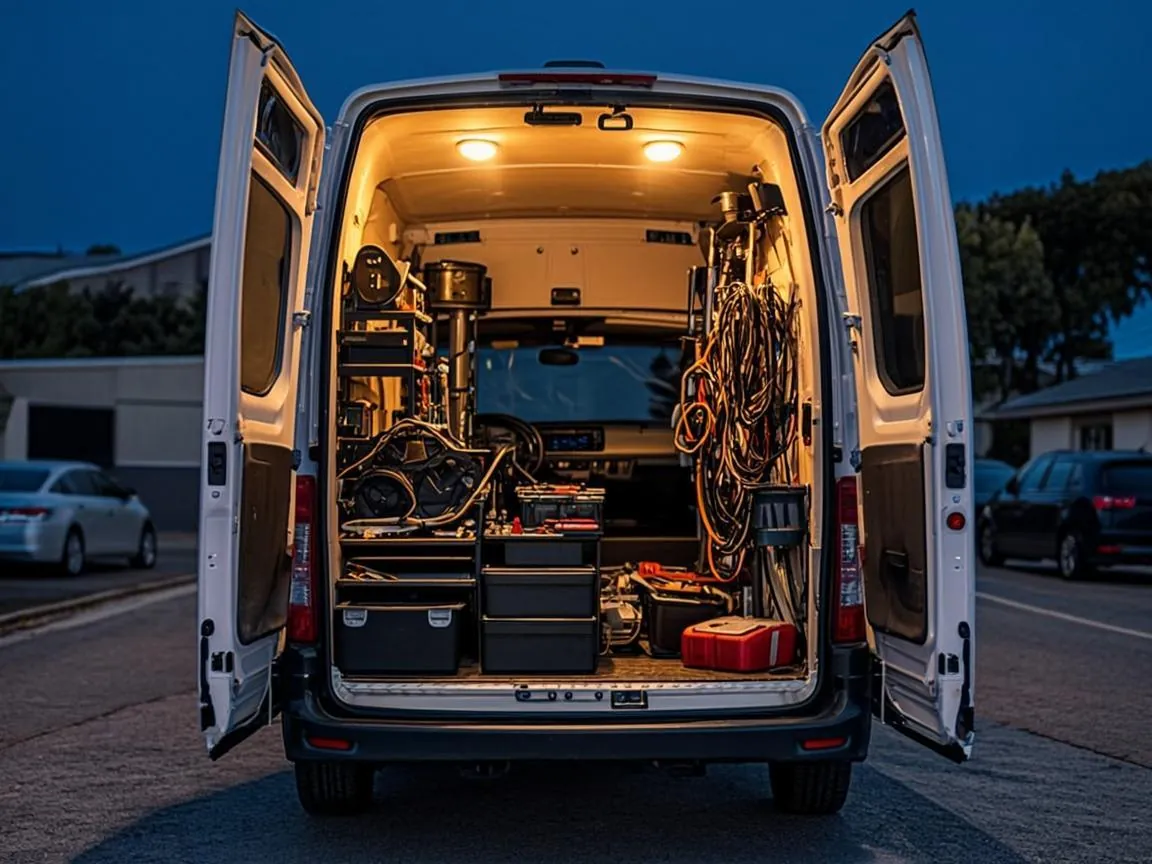
Emergency response is a sequence, and every truck we stage from 390 Cabot Street carries the equipment to execute all three phases of it in a single visit:
Arrive and control the backup
The crew arrives, stops the active overflow by clearing the blockage with the right machine for the pipe, and gets the standing water situation under control so contamination stops spreading. Flood control comes first, always.
Camera the line and find the cause
With flow restored, an HD camera pass identifies why it happened: roots at a joint, a cracked or sagging section, grease, or a collapse. You see the footage on screen, and the recording is yours.
Stabilize now, plan the permanent fix
You leave the visit with the line flowing, a documented diagnosis, and a written option set for the permanent repair, priced, so the next step happens on your calendar instead of during the next storm.
The 60-minute framing is honest about what it covers: for most Beverly addresses, dispatch to arrival is measured in minutes rather than hours because the trucks stage in town, and the first two phases, clearing and camera verification, are typically complete within the first hour on site. Structural repairs are planned, not improvised at midnight; stabilizing the situation tonight and scheduling the right permanent fix is the professionally correct sequence, and it is the one we follow.
Working With Property Insurance Claims
Whether a sewer backup is covered depends on your policy, and more precisely on whether a water backup / sewer backup rider was added to it; many standard Massachusetts policies exclude backup events unless that rider exists. We are not the insurance company, and we do not pretend to adjust claims, but we do everything a good contractor can do to make your claim documentable: timestamped photos of the affected areas before cleanup, the full recorded camera inspection showing the cause, a written findings report, and a line-item invoice that separates emergency clearing from any repair work.
Two practical tips from hundreds of these calls. First, photograph everything before anything is moved or mopped, wide shots and close-ups, because documentation taken after cleanup is worth a fraction of contemporaneous photos. Second, call your carrier's claims line early, even from the driveway while you wait for us, because claim numbers and adjuster assignments open the process faster than anything else can. If your claim needs our footage, the report, or a conversation between our technician and your adjuster, that support is part of the service.
The First Five Minutes: Your Emergency Checklist
- Stop every drop of water. No flushes, no faucets, no showers, no laundry, no dishwasher. Every gallon sent down a drain comes back up at the lowest fixture.
- Keep everyone out of the water. Sewage is a biohazard; keep children, pets, and skin contact away, and ventilate the area if it is safe to do so.
- Kill power to the affected zone if water is near outlets, from the breaker panel only if the panel itself is dry and safe to reach. Never stand in water to reach a breaker.
- Photograph before touching anything, for insurance: wide shots, then close-ups of damaged property and the highest water line.
- Call (978) 286-4881 and tell dispatch sewage is actively backing up. Emergency calls are triaged first, and the dispatcher will walk you through containment while the truck rolls.
What Emergency Response Costs
After-hours work carries a premium over scheduled rates, and we say so on the phone before the truck moves rather than surprising you on the invoice. Once on site, the work itself prices like any other visit: clearing a backed-up main most often runs $150 to $350 by snaking, hydro-jetting restoration runs $400 to $900 where grease or root sludge demands it, and the camera verification that proves the clear is quoted with the visit. You approve every number before work starts, at 2 AM same as 2 PM, because mystery line items during an emergency are the opposite of professional service.
Why Backups Spike in Beverly Winters and Storms
Essex County produces two predictable backup seasons, and knowing them helps you read your own risk. Winter brings freeze-thaw failures: frost drives deep into the ground, flexing older clay and cast iron until joints crack, and January cold snaps freeze slow-moving exterior runs solid, particularly in the higher, older sections of Montserrat and Beverly Cove. Then the fall leaf-and-rain stretch chokes main lines that roots already narrowed, with the first serious nor'easter pushing groundwater infiltration over the edge on low-lying streets near the Bass River. Crews who run these blocks every week know the patterns, and that familiarity is a large part of why the right machine usually shows up first.
If the emergency taught you that the line has a structural problem, the permanent fixes live on the pages for HD video sewer camera inspection (to document it), non-invasive trenchless pipe lining and trenchless pipe bursting (to repair it), and traditional sewer line excavation when the line is beyond no-dig rescue. And for every non-emergency moment in between, Beverly sewer line repair & drain cleaning is the starting point for keeping the whole system ahead of failure. When it is midnight and the floor drain is overflowing, though, none of that matters: call, stop using water, and let the truck do the next part.