Snaking or jetting: which one does your clogged drain actually need? The answer depends on what is in the pipe, not on which service costs more. This guide explains what each tool physically does, which blockages each one solves, and how to tell the difference before you pay for the wrong one.
What a Drain Snake Physically Does
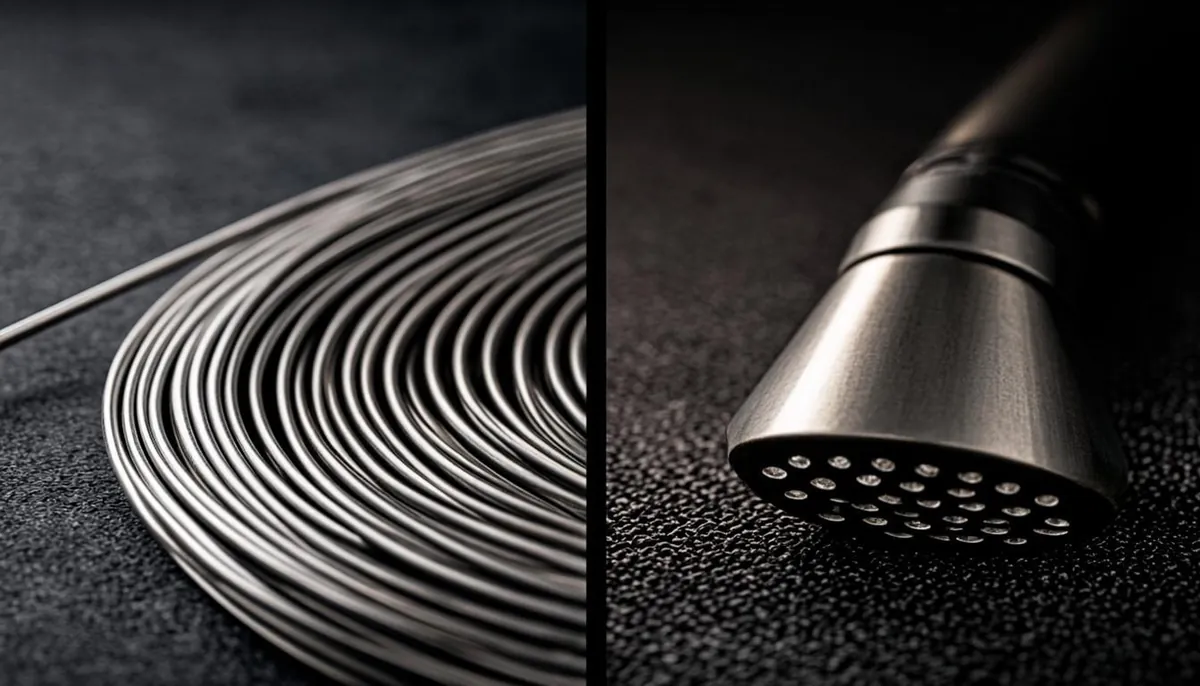
A drain snake (the pros say cable machine) is a steel coil driven down the pipe by a motor. Its corkscrew tip either hooks debris or bores through it. That makes a snake superb at one thing: opening a passageway through a discrete, soft clog. A hairball, a wad of wipes, a toy, a root poked through at one joint: all snake work. What a cable does not do is clean. It slides past the grease film coating the walls and leaves it there. The pipe drains again, but the buildup that caused the clog is still in residence, accumulating toward the next one.
What Hydro-Jetting Physically Does
A jetting rig pumps water at up to 4,000 PSI through a specialized nozzle with jets angled backward along the pipe wall. The hose self-propels downstream while the spray scours the full circumference, shearing grease off walls, chipping scale, and shredding root masses. Everything loosened flows back to the access point and out. Where a snake opens a hole in the clog, jetting removes the clog and the conditions that made it. The pipe comes back closer to its as-built interior than it has been in years.
The Decision Table
| Situation | Best Tool | Why |
|---|---|---|
| One fixture clogged, first time | Snake (or plunger) | Soft local clog; fastest and cheapest fix |
| Kitchen line clogs repeatedly | Jetting | Grease coats the whole wall; cable only punches through |
| Roots on camera at multiple joints | Jetting w/ root head | Cuts the mass along the run, preps for lining |
| Prep before pipe lining | Jetting | Resin bonds only to clean pipe |
| Scale-narrowed cast iron | Jetting/descaling | Chips the crust a cable glides over |
| Toy or wipe mass near a fixture | Snake | Retrieval and punch-through, no cleaning needed |
Cost Context
In our area, snaking runs about $150 to $350 and jetting about $400 to $900. The price difference is the equipment and the outcome: one reopens the pipe, the other restores it. Where jetting proves its value is recurrence. A $300 snake every four months is a $900-a-year habit that leaves the underlying film untouched. A jetting visit that resets the pipe to bare walls usually buys a year or more of quiet, and the camera after-jet shows you exactly what was removed.
The Camera Decides, Not the Menu
Here is the confession that matters: a shop that owns only a cable machine will find a reason to snake. A shop that owns both will look first. We camera every repeat-offender line before choosing a tool, because the footage settles the debate in seconds. Grease film everywhere: jet. One rag at the bend: snake. Roots at three joints: jet now, price the liner after. You can see the full process on our main line clearing service page, and if a main is currently backing up, the 24/7 emergency crew carries both machines on the same truck.
Quick Answers
Is hydro-jetting worth the extra cost over snaking?
For grease, scale, and root problems, yes. Jetting strips the buildup that causes repeat clogs, while snaking reopens a hole through it. For a one-time soft clog near a fixture, snaking is the honest answer and jetting would be overkill.
How often should a drain line be jetted?
Lines with heavy kitchen use or mature trees overhead do well annually to every two years. Lines that re-clog within months of snaking are telling you their walls need cleaning, and the camera at the next visit confirms the interval.
Not Sure Which Tool Your Line Needs?
We camera first, then quote the right machine. Free estimates and footage you keep, either way.