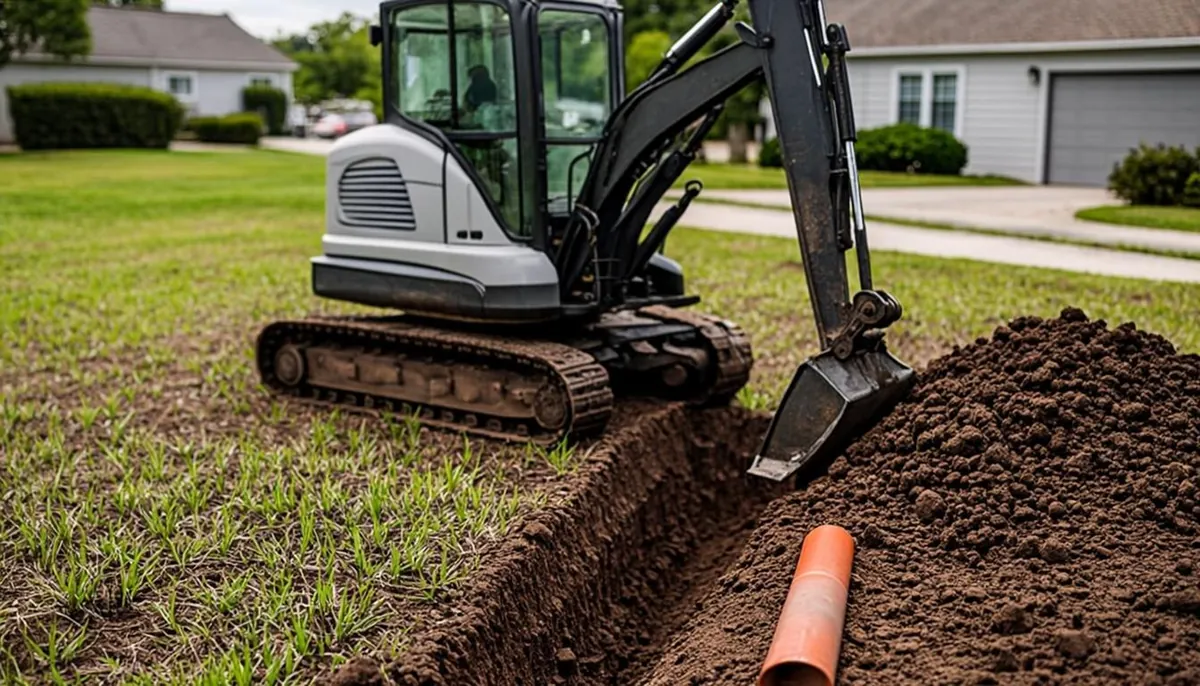
Trenchless or open-trench: which sewer repair actually serves a North Shore home better? The honest answer is that both are legitimate tools, and the camera footage picks the winner. What follows is the comparison we walk customers through on their own driveways, with the costs, timelines, and trade-offs laid out in plain terms.
The Two Methods, Defined
Traditional excavation is what it sounds like: a backhoe opens a trench along the failed run, the old pipe comes out, new pipe goes in, and everything above gets rebuilt. Trenchless pipe lining (CIPP) skips the trench. A resin-saturated liner enters the old pipe through a cleanout or small access pit, inflates against the walls, and cures into a seamless new pipe inside the old one. Two very different job sites result from those two sentences.
Cost Comparison: Upfront and Hidden
Sticker prices overlap, which surprises people. Lining usually lands between $4,000 and $9,500 in our area, and open-trench replacement of the same run prices between $5,000 and $12,000 or more. But the excavation column always carries line items the lining column never sees: lawn and garden restoration, driveway or walkway patching, fence removal, irrigation repairs, and occasionally masonry work on historic stone edging. Those restoration costs are real dollars, and they land after the sewer itself is already fixed, when everyone is tired and the budget is spent.
Timeline: One Day Against a Week
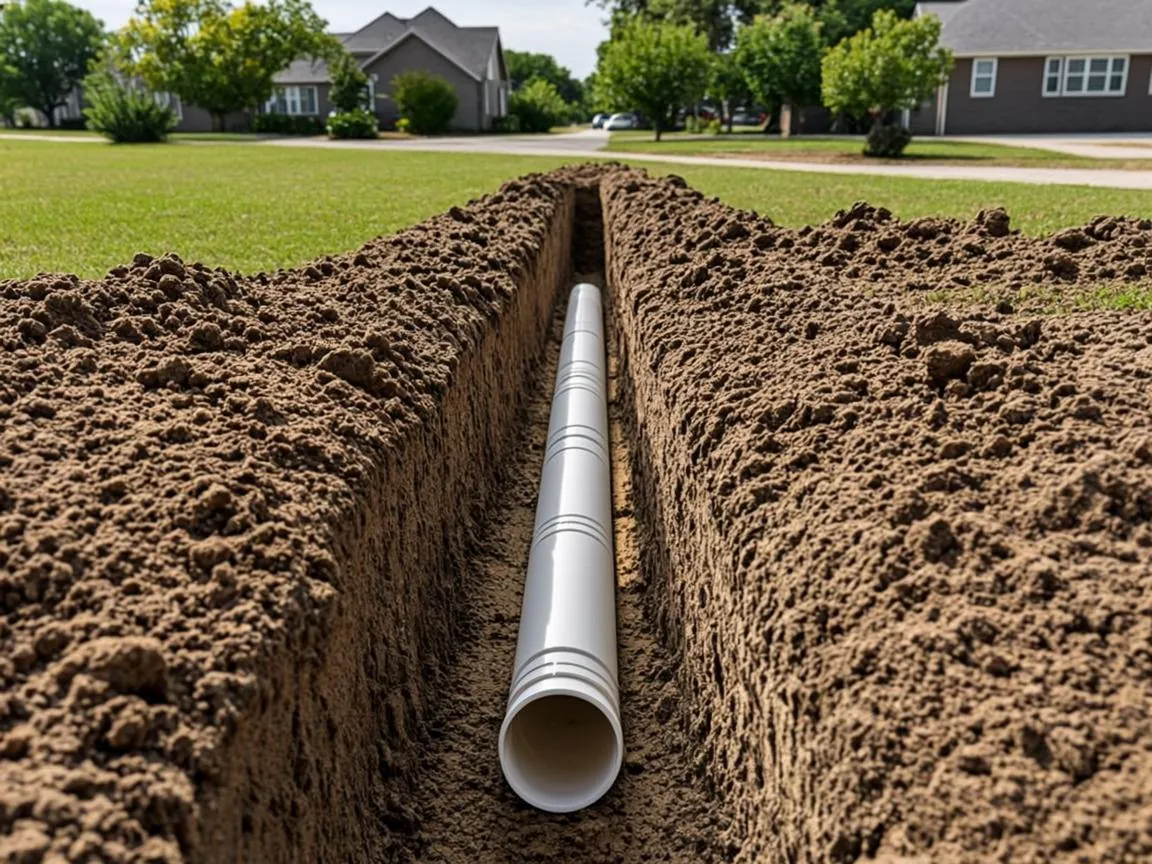
Most residential lining jobs run morning to evening in a single day, with the pipe back in service that night. Excavation of the same run is typically a multi-day sequence: dig day, pipe day, backfill and compaction day, then surface restoration either by the same crew or by another trade. Rain turns that calendar into soup. If the household is down to one working bathroom, the difference between one day and four is not a scheduling detail; it is the whole decision.
Where Each Method Wins
| Factor | Trenchless Lining | Open-Trench Replacement |
|---|---|---|
| Typical cost (area) | $4,000 – $9,500 | $5,000 – $12,000+ |
| Typical timeline | About one day | Several days plus restoration |
| Yard & hardscape impact | None beyond access points | Trench across lawn or paving |
| Root and joint sealing | Seamless, no joints | New joints every section |
| Severe bellies / collapse | Not suitable | Suitable (the fix of record) |
| Diameter reduction | Slight, usually offset by smooth walls | None |
The Cases Where Digging Is Genuinely Right
Credibility requires the other column to get its due. A fully collapsed pipe, a belly deep enough to hold standing sewage permanently, a lateral that never had a consistent grade, or a section crushed by construction all need excavation. So does a line that needs re-routing. When we see those on camera, we say so plainly and quote the dig; our sewer line excavation and replacement service covers how a permitted dig is engineered, backfilled, and restored. What trenchless advocates sometimes underplay is that lining follows the existing pipe path, defects and all, and a pipe with no structure left to line is not a lining candidate. Between the two extremes sit middle options worth knowing: a targeted spot repair or pipe bursting seals one failed joint or replaces a collapsed run through two small pits, at a fraction of the excavation footprint.
How the Decision Actually Gets Made
The sequence is always the same: recorded camera inspection first, then the recommendation. If the run is cracked and root-invaded but straight, lining is the cheaper, faster, cleaner answer. If the footage shows structure failure, the dig is the honest answer, and a good contractor will show you the frames that prove it. You can read about how trenchless pipe bursting works in Beverly or compare costs live with a recorded camera inspection before committing to either path.
Quick Answers
Is trenchless sewer repair cheaper than excavation?
Upfront prices overlap, but lining typically lands below the excavation total once lawn, driveway, and masonry restoration are counted. Those restoration line items only exist on the digging side, and they routinely move the real-world gap to thousands of dollars.
When is traditional excavation the better choice?
When the pipe has lost its structure: a full collapse, a deep belly holding water, or a crushed or mis-graded section. Lining follows the existing path, so a pipe with nothing left to line against needs open-trench replacement.
Which Fix Fits Your Pipe? Ask the Camera.
A recorded inspection prices both paths honestly. Free quotes, footage you keep, no obligation to either method.