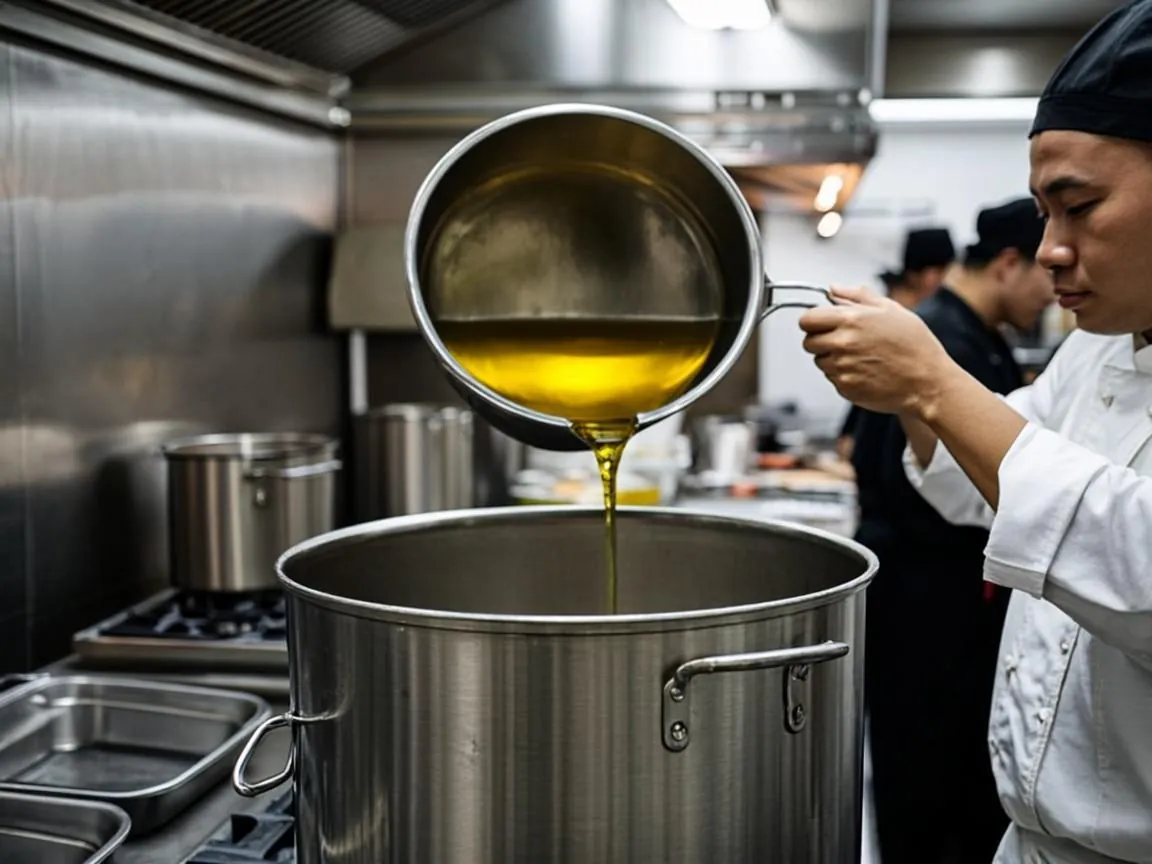
For a restaurant, nothing on the plumbing spectrum ends service faster than a grease-choked sewer line. A Friday dinner rush standing ankle-deep in backflow from floor sinks, health inspectors response-testing, tables turned away — that is what FOG (fats, oils, and grease) failure looks like, and it is the most common commercial sewer emergency on our board in Essex County. The economics are lopsided in your favor: a scheduled jetting program costs a small fraction of one revenue-night lost to a backup, plus the municipal fines and re-inspection cycles that follow. This guide is how the kitchens that never flood actually run their lines.
What FOG Actually Does Inside Your Drain Line
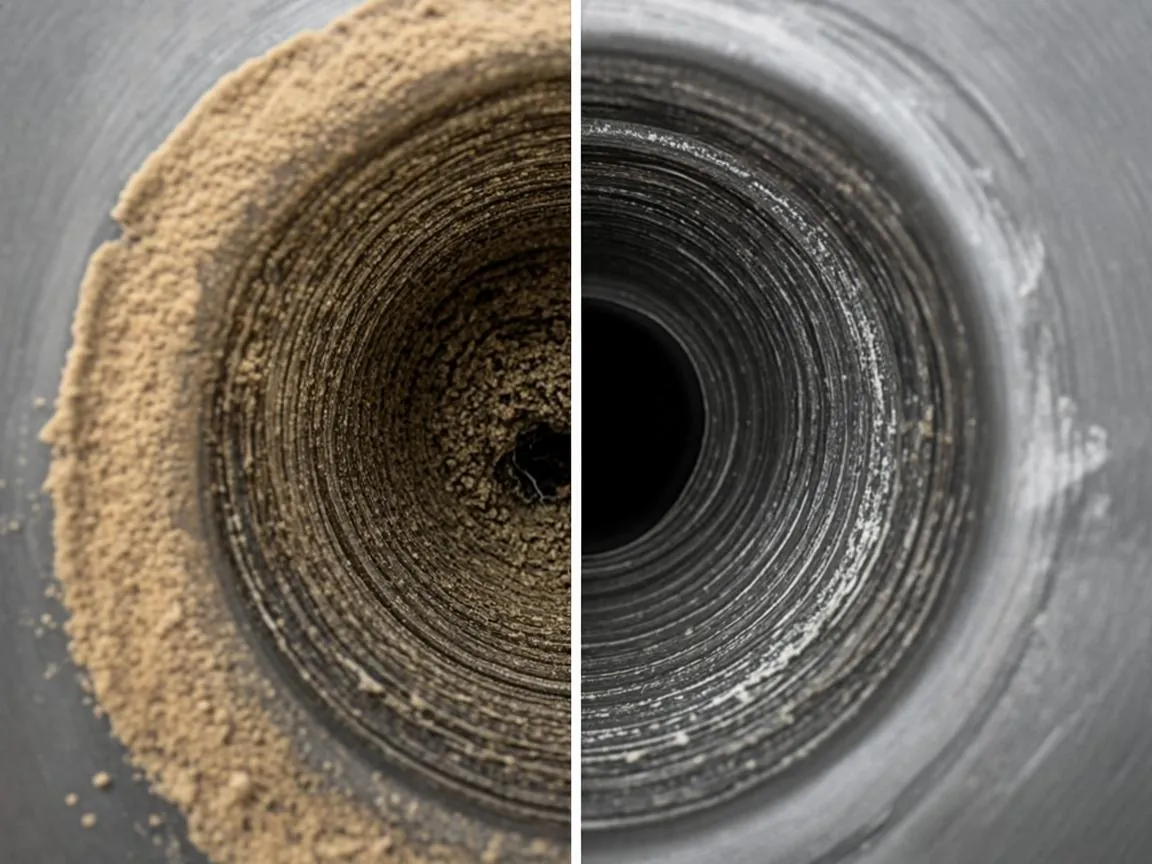
Grease leaves the kitchen as a warm liquid and becomes a solid in the pipe. Drain lines run at ground temperature year-round — roughly 50 to 60°F — and the moment warm fryer oil hits that wall, it congeals. The first layer sticks to the crown and walls of the pipe, and every subsequent discharge sticks to the first. The buildup is layered, like a candle growing inside the pipe, narrowing the bore a little each week. Emulsified detergents and hot rinse water push the problem downstream but do not remove the layers; they just relocate the choke point further toward the street, where the kitchen lateral meets the main and the city's cameras start caring.
The Regulatory Landscape in Essex County
Food establishments connected to municipal sewers operate under local sewer-use ordinances and sewer district rules that require, in essence, three things: an approved grease interceptor or trap sized to the establishment, scheduled maintenance of that interceptor and the kitchen line, and records of that maintenance available on inspection. The enforcement mechanism most owners actually feel is the backup investigation: when a municipal main surcharges near a restaurant block, the first question asked is whose kitchen contributed, and the establishment without jetting logs and pump-out receipts wears the answer. Fines, mandated cleanings under city supervision, and repeat-inspection costs dwarf the price of the preventive program that would have avoided the question entirely.
Building a Jetting Calendar That Actually Prevents Fines
Generic advice says quarterly. Your line has its own opinion, and the camera can tell you what it is. The right process: jet the kitchen lateral clean, then scope it on the way out to establish a baseline, then re-scope after 60 to 90 days to measure how fast the grease returns. That measurement — not a generic rule — sets the interval. Volume guidance as a starting point:
- High-volume fry operations (broad menus, high covers, summer coastal rush): monthly to quarterly jetting.
- Standard sit-down kitchens: quarterly, tightening seasonally.
- Cafés and low-FOG prep: semi-annual, with interceptor pump-outs on their own schedule.
Method matters as much as frequency: a snake pokes a hole through a grease column and the line re-chokes in weeks, while hydro-jetting shears the pipe wall clean and the calendar resets to zero. That is why jetting is the backbone of every serious FOG program. Our commercial grease trap and line jetting service pairs every clean with documentation your inspector can read.
Interceptor Maintenance: The 25 Percent Rule
The grease interceptor is the first line of defense, and it fails in a measurable way: as FOG and solids accumulate, the effective capacity shrinks until grease starts escaping downstream — at which point the jetting calendar is fighting the interceptor instead of supporting it. The industry standard is to pump the interceptor when FOG and solids occupy roughly 25 percent of its liquid depth. For most kitchens that means a pump-out every one to three months, logged with dates and hauler receipts. Keep the log with the jetting records; during any backup investigation, the establishment with the paper trail is the establishment that finishes the interview quickly.
Early Warning Signs You Are Headed for a Service Stoppage
Grease lines telegraph their failure. Floor sinks that drain a little slower each week. Sewer odor rising from kitchen drains during peak heat. The lowest fixture gurgling when the dish machine discharges. Grease visible at the exterior cleanout cap. Any one of these means the bore is past half-narrowed and the calendar needs compressing now, not next quarter. The chemistry and mechanics behind the buildup — and the kitchen habits that slow it — are in our guide to why FOG causes main line backups. And when the line does choke mid-service, our 24/7 emergency response gets a stocked truck moving before the health department's phone call comes.
Quick Answers
How often should a restaurant hydro-jet its grease lines?
High-volume kitchens that fry daily typically need quarterly jetting of the kitchen lateral, with busy coastal-season operations on monthly schedules. The honest answer comes from camera: measure how fast grease re-accumulates after a clean, and set the calendar from that data instead of a generic rule.
Are grease trap maintenance logs required in Massachusetts?
Food establishments connected to municipal sewer systems are generally required to maintain grease interceptors and keep pumping and maintenance records available for inspection under local sewer-use ordinances. Lost or missing logs during a backup investigation are treated as a maintenance failure, which is why we issue documentation with every commercial service visit.
What are the warning signs a grease line is about to fail?
Floor sinks that drain slower each week, sewer odor from kitchen drains during peak service, gurgling from the lowest fixtures when the dishwasher discharges, and grease visibly surfacing at the exterior cleanout. Any one of these means the line is past the halfway point to a service-stopping backup.
Set the Calendar. Keep the Doors Open.
Camera-based jetting intervals, interceptor documentation, and 24/7 emergency cover for North Shore kitchens. One program, zero backup nights.