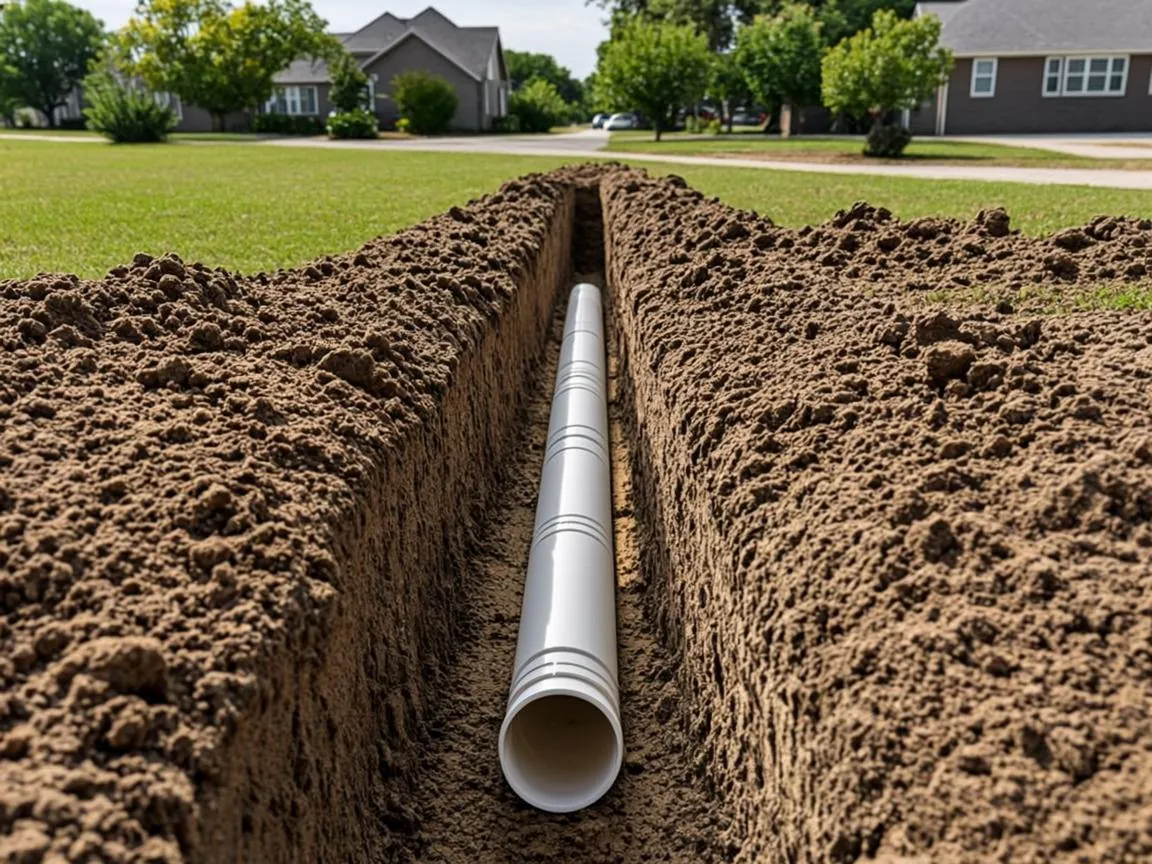
Most of a sewer job is plumbing. The excavation part, though, is law — and it is the part homeowners quote-shopping for a replacement line most often forget to ask about. Digging in a Beverly city way, or connecting to the public sewer, runs through three separate gates: a city sewer permit, a street opening permit, and the state's Dig Safe 811 marking system. Each has its own office, its own timeline, and its own penalty for skipping it. Here is the sequence, in the order a legal job actually follows it.
Gate 1: The Sewer Connection / Discharge Permit
Beverly's sewer ordinance puts the city's sewer system under the authority of the Director of Engineering and Public Services, and the rule is plain: nobody uncovers, disturbs, or connects to a public sewer without a written permit from that office first. The application describes the work, the property, and the contractor. For a lateral replacement, the permit also triggers the city's staged inspections — an inspector verifies the pipe bed and bedding material before backfill, and verifies the connection to the main. Homeowners can technically pull this permit themselves, but the inspection sequencing is contractor business, which is why the permit is normally filed by whoever holds the shovel.
Gate 2: The Street Opening Permit
The moment the dig crosses the curb line — replacing the tap, working in the tree belt, or trenching across a sidewalk — a second permit enters: the street opening permit, administered by the City's Department of Public Services. This one governs how public infrastructure gets cut and, critically, how it gets put back. DPS sets the restoration standard: compacted gravel lifts, pavement thickness, curb matching, and concrete sidewalk pours that meet city spec. Some jurisdictions also require a restoration deposit held against the quality of the patch. Scheduling matters too — winter freeze restrictions and heavy-traffic periods can constrain when an opening is allowed at all.
Gate 3: Dig Safe 811 — Before Any Machine Moves
Massachusetts law requires a Dig Safe ticket at least 72 hours before any mechanized excavation anywhere — public way or private yard. The ticket notifies every member utility, and their locators mark gas, electric, telecom, water, and the public sewer main with color-coded paint and flags. Excavation may not begin until all notified utilities have cleared the ticket. Two rules get crews cited every season: digging before the 72-hour clock runs out, and excavating inside the marked tolerance zone with a machine — within roughly 18 inches of a mark, the law expects careful hand digging or vacuum excavation. And remember the gap this guide on private pipe mapping explains: Dig Safe marks the utilities the providers own. Your building sewer gets marked by whoever you hire to locate it.

Who Files What — and Who Carries the Liability
- The contractor normally files all three. Permits, Dig Safe tickets, inspection scheduling, and restoration coordination are packaged into an excavation quote — ask whether they are, because unfiled work is the homeowner's liability the day something goes wrong.
- Homeowners who hire unlicensed handymen inherit the risk. An unpermitted connection discovered during a future home sale must be legalized retroactively — often at multiples of the original permit cost.
- Dig Safe tickets are job-specific. A ticket for the original dig does not cover a return trip two weeks later; tickets expire and re-filing takes another 72 hours.
The Restoration Endgame
Legal excavation ends with the site returned to spec: compacted backfill, pavement matched to the surrounding surface, curbs reset, and loam and seed where grass was. City inspectors sign off before the permit closes, and the closure paperwork is worth keeping with the deed file — it documents, for the next owner or buyer's attorney, that the lateral work under the front yard was done above board. Our traditional sewer line excavation service handles all three gates as part of every quote, and the Beverly sewer and drain services hub lists the full permitting checklist we work from. Comparison-shopping excavation quotes? Ask each bidder which permits are included — the cheapest quote that excludes permits and restoration is rarely the cheapest job.
Quick Answers
Do I need a permit to replace my sewer line in Beverly, MA?
Yes. Work that uncovers, alters, or connects to the public sewer requires a written permit from the City's Director of Engineering and Public Services, and any dig that reaches the curb line or sidewalk requires a street opening permit. Work entirely on private property still requires Dig Safe filing before mechanized digging.
How long does the Dig Safe 811 process take in Massachusetts?
State law requires filing at least 72 hours before digging begins, excluding the day of notice. Utility crews or their contract locators mark the public lines within that window, and excavation may not start until every notified utility has responded and the flags are in the ground.
What happens if you dig without calling Dig Safe?
Beyond the safety risk of striking gas or electric infrastructure, Massachusetts imposes civil penalties on contractors and property owners who dig without a valid ticket, and any resulting utility damage bills land on the party that failed to file. Insurance can also decline claims tied to unpermitted, unmarked digging.
Permits, Mark-Outs, and Paperwork — Handled.
Every excavation quote includes the city permits, Dig Safe filing, inspections, and restoration to city standard. One call, no compliance gaps.