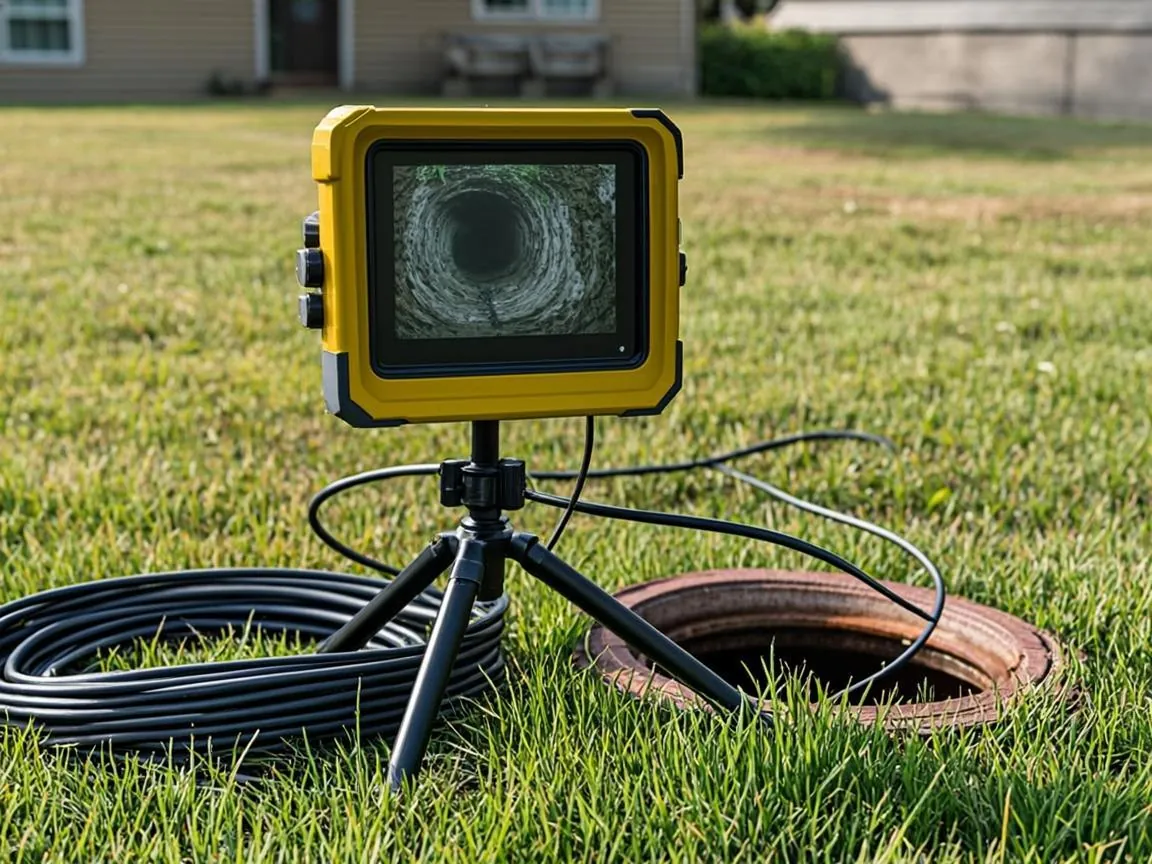
The scope report lands in your inbox as a video file, a few photos, and a page of vocabulary you have never read before — usually forty-eight hours before your contingency deadline. It is the single most expensive document in the whole home purchase if you cannot interpret it, because a lateral that needs $9,000 of work looks almost identical on paper to one that needs a $300 cleaning. Here is the decoder, term by term, with a negotiating strategy attached to each.
The Vocabulary That Decides Money
Pipe belly: a sag in the pipe grade where water pools permanently. The camera shows standing water with the pipe wall visible above the surface line. Minor bellies under a half-inch of standing water over a short distance are observation items; a belly holding two inches across ten feet is a structural grade failure that only excavation or pipe bursting can truly correct.
Offset joint: two pipe sections that no longer line up — one barrel has settled lower than its neighbor. Offsets catch toilet paper and solids on the leading edge. A quarter-inch offset is a maintenance nuisance; once the lip exceeds about a third of the pipe's inner wall height, it will clog on schedule and needs repair.
Root intrusion (percentage): how much of the pipe's opening the root mass occupies. Thirty percent means fine roots threading through a gasket that jetting and an inhibitor can manage. Seventy percent with visible structural separation means the joint has been forced open and the roots are holding it open — lining or replacement territory.
Cast iron scaling: rust tubercles narrowing the interior of pre-1980 iron pipe. Scaling is described in percentage of wall thickness loss or as a flow reduction. Under thirty percent: monitor. Past fifty: the pipe is on a timeline, and the timeline is shorter in coastal air like Beverly Farms and Prides Crossing, where salt exposure accelerates the corrosion.
Cosmetic, Negotiable, or Deal-Changer
- Cosmetic / monitor: minor root hairs at one joint, light scaling, a single small grease deposit, slight standing water. Clean and re-scope in a few years. No credit expected.
- Negotiable: thirty-to-fifty percent root intrusion at isolated joints, a localized offset, a belly under an inch, isolated scaling. Typical fixes run $400 to $9,500 depending on whether jetting or a trenchless spot repair solves it. Get a repair bid and put it against the price.
- Deal-changer (or priced-in): full-length root load, multiple structural defects, a long sagging belly, or collapsed sections. This is a $5,000–$12,000+ conversation. Either the seller prices it in, the repair gets escrowed, or the buyer walks — but the decision is only rational with a written repair quote in hand.
Turning the Report Into Negotiating Leverage
A scope video alone rarely moves a seller; a written bid does. The sequence that works: get the scope early in the contingency window, send the footage to a repair company for a flat-rate quote on exactly what the camera found, then present the closing agent with the bid as the credit number. Sellers contest opinions, but they rarely contest a line-item quote from a licensed contractor. If the report locates the defect by depth and distance from the house — as ours always does — the quote is credible at the table because it can be verified by anyone.
Red Flags Specific to Essex County Housing Stock
Homes built before 1980 in Beverly, Salem, and Marblehead ran vitrified clay laterals with mortar or gasket joints — short sections that roots probe one after another, and clay that becomes brittle with a century of frost heave. Postwar homes through the 1970s often have cast iron that scales from the inside out. If the report says "clay" or "cast iron" and the house predates the material's replacement era, treat any finding as the start of a conversation, not the end of one: the next joint down the line is the same age. Our guide to sewer inspections before buying in Beverly covers the neighborhood-by-neighborhood breakdown.
What a Proper Buyer's Scope Package Includes
A report worth negotiating with contains five things: full-length video you can forward to contractors; a written findings list keyed to video timestamps; the pipe material and diameter; the locate information (depth and direction); and a good-faith repair estimate for anything flagged. Our pre-purchase sewer scoping service builds exactly that package, and if you want to see what the camera hour involves before booking, our walkthrough of what happens during a professional scope covers it step by step. Ask any prospective inspector whether they deliver all five elements before you book — a report missing them is a video, not a report.
Quick Answers
Which sewer scope findings should make a buyer renegotiate?
Anything structural: a pipe belly holding standing water, offset joints that catch solids, dense root intrusion past the joints, or cast iron scaled past thirty percent of the wall. Each carries a four-figure repair ticket that should be negotiated before closing, not discovered after.
Is a sewer scope part of a standard home inspection?
No. A standard home inspection stops at the foundation and covers the interior drain-waste-vent system only. The buried lateral between house and city main requires a dedicated camera scope, which is why it is ordered separately and usually during the inspection contingency window.
Can a pipe belly be fixed without digging up the yard?
Shallow, short bellies are sometimes re-supported by compaction grouting, but a true grade failure means the soil beneath the pipe has moved. Correcting the slope genuinely requires excavation or pipe bursting with re-bedding; lining alone cannot rebuild a missing slope.
Buying on the North Shore? Scope the Lateral First.
Pre-purchase scoping with written findings, locate data, and a flat-rate repair bid you can take to the closing table. 48-hour turnaround.