Most homeowners meet the sewer camera for the first time at the worst possible moment, mid-backup. This is what actually happens during a professional scope when nothing is on fire: the equipment, the sequence, and the deliverables, so the first time you book one you know exactly what the hour buys.
The Equipment That Comes Off the Truck
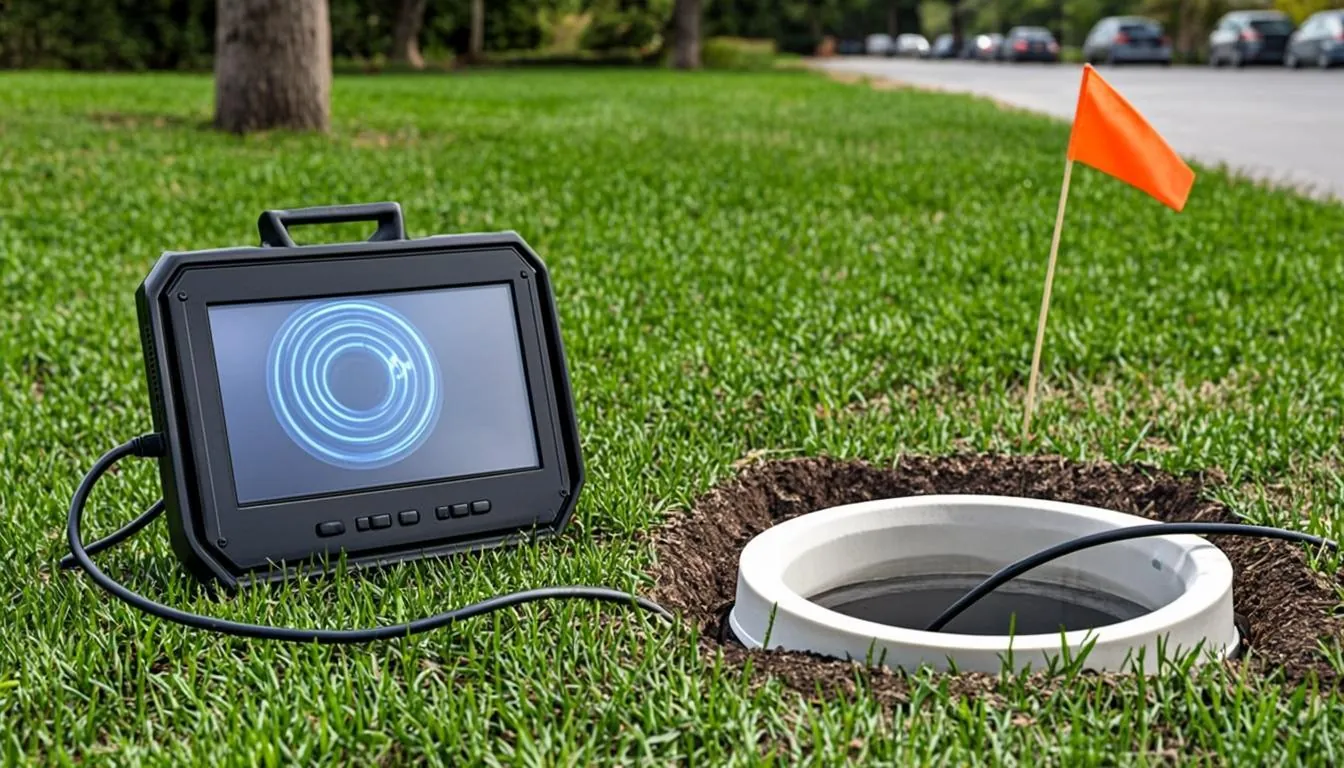
Three pieces do the work. A coiled push cable carries the camera head: a fisheye-lens, self-leveling unit with LED lighting that survives submersion. A counter wheel on the reel logs footage distance so every observation has an address along the pipe. And a sonde (a radio transmitter built into the camera head) speaks to a surface receiver, which is how the operator marks positions and depths on the ground above. The recording unit captures everything with a distance overlay burned into the frame.
The Sequence, Step by Step
- Access. The camera enters through an existing cleanout where one exists, or through a pulled toilet or roof vent when it does not. Non-invasive is the default; digging is never part of a scope.
- The run to the main. The operator feeds the head toward the street main, narrating distances while the monitor shows the interior live. Homeowners are invited to watch; questions mid-stream are normal and encouraged.
- Defect marks. At each crack, offset joint, root intrusion, or belly, the operator stops, records the distance, and pings the sonde so the surface locator can flag the spot on the lawn.
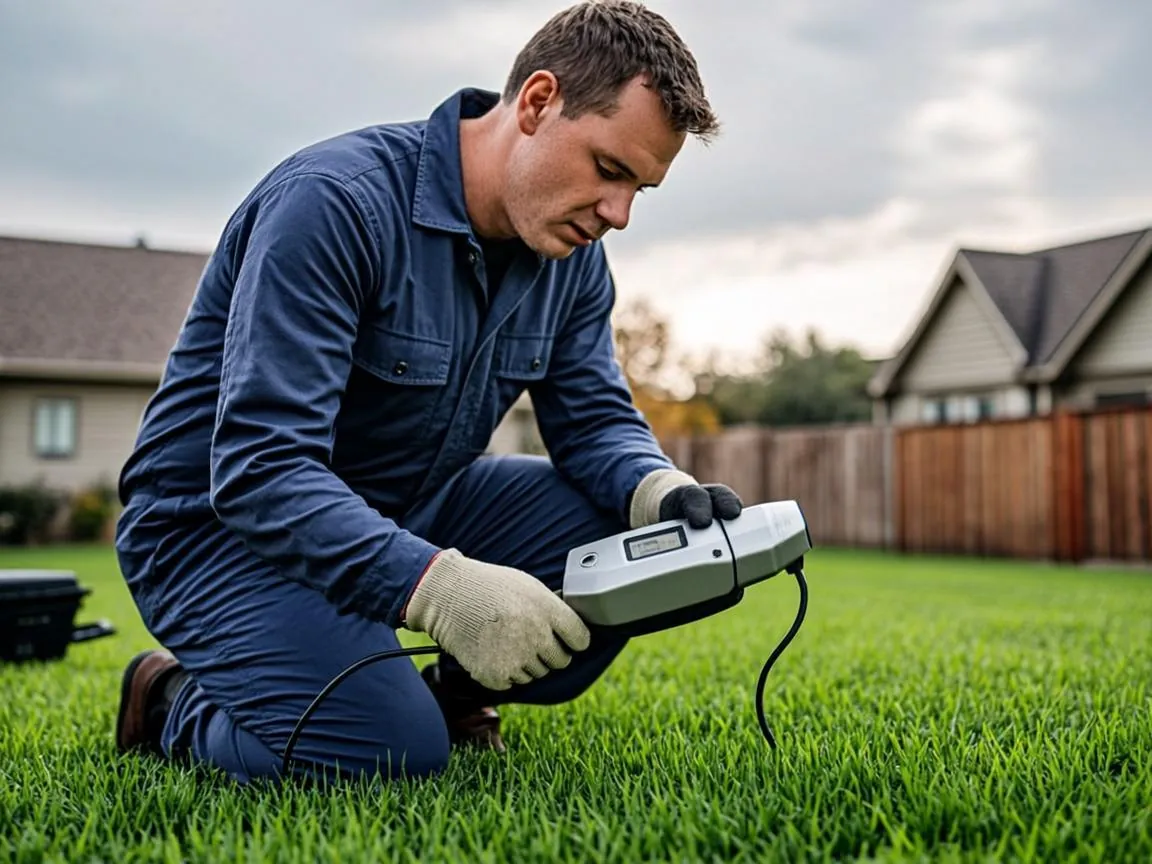
- Surface locating. Walking the receiver along the signal traces the pipe's actual path and depth. Surprises are common: runs that jog around trees, or that are deeper or shallower than the basement suggests.
- The debrief. You watch the significant frames again with the operator, get the plain-English diagnosis, and the recording plus written summary go home with you.
What the Footage Shows a Trained Eye
Reading pipe footage is a skill learned over hundreds of runs. Short clay barrels register small joint offsets that are perfectly normal; the eye has to separate ordinary construction from movement that is actively failing. Scale texture on cast iron can hide a hairline crack, which is why distance data and depth marks supplement the picture rather than the picture standing alone. The deliverable is not just video; it is the interpretation: monitor, jet, line, or dig, with the reasoning shown.
What You Leave With
The recording file, a written defect summary with distances and depths, and a recommendation tied to what the frames actually show. If a repair makes sense, the inspection fee is credited toward it. The full service description, including what each finding typically costs to fix, is on our video locating and camera inspection page, and the main line clearing page covers the most common follow-up cleaning step.
Quick Answers
Does a sewer scope require digging?
No. The camera enters through an existing cleanout, a pulled toilet, or a vent, and the run is filmed from inside. The only thing that touches your yard is the locator wand tracing the pipe path above ground.
How accurate are the depth readings?
The sonde-and-receiver method marks positions and depths to within inches on the surface. That precision is what turns a repair quote into a real number instead of a padded range.
See the Hour-Long Process for Yourself.
Book a scope and watch your pipe's interior live on the monitor. Recording and defect report included.