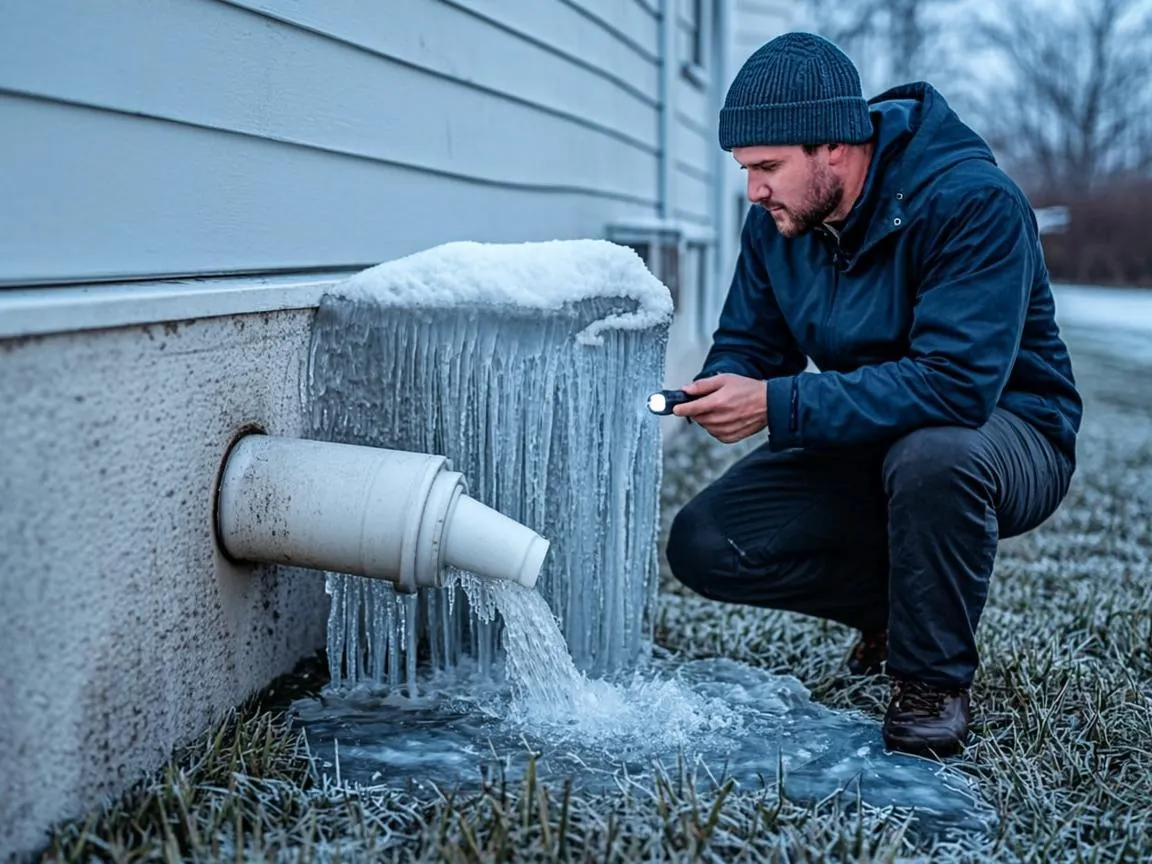
The failure nobody notices until it is too late happens in January: the sump pump runs, the pit drains, the pump shuts off — and the water it just pumped out has gone three feet and stopped. Somewhere along the discharge line, standing water froze solid and plugged the pipe. The next pump cycle pushes against the ice, the pit refills faster than it empties, and the basement floods with a pump that is technically working perfectly. Every winter along the North Shore, this exact scene plays out in houses whose discharge plumbing was assembled without two details: slope and depth.
How a Discharge Line Freezes
The freeze mechanism is almost always standing water. A discharge line that runs level or sags anywhere along its route holds residual water between pump cycles — a cup in a low spot, a foot of pipe filled where the grade goes flat. Outdoor temperatures reach that water first wherever the pipe is shallow or exposed, and it freezes from the walls inward. One cold night plugs a cup; two weeks of January extends the plug along the whole flat run. Lines that discharge above grade into the open air develop a second freeze point at the outlet itself, where the drips between cycles build an ice mound that climbs back into the pipe. The lesson: freeze protection is mostly geometry, not heat tape — water that cannot stand cannot freeze in place.
The Clog Mechanisms (There Are More Than You Think)
- Sediment and sand. Groundwater carries fines; they settle in every level section and at every fitting, gradually filling the pipe bottom like a riverbed.
- Scale and iron staining. Well-fed systems and iron-rich municipal water leave mineral scale that narrows the bore year over year.
- Crushed corrugated hose. The flexible black corrugated discharge hose sold at hardware stores kinks, crushes under foot traffic and snow load, and its ribbed interior traps debris at every ridge.
- Ice-sediment composite. The winter special: sediment narrows the line all summer, the narrowed section freezes faster in winter, and the two failures feed each other.
Winter-Proofing Options That Actually Work
The durable fix list, in order of impact: bury the outdoor run below frost depth — Essex County sits in the 42-to-48-inch band, and pipe at that depth simply does not freeze; maintain a continuous downhill slope of at least an eighth-inch per foot so the line empties itself after every cycle; terminate at an ice-discharge head — a spring-loaded or angled outlet designed to pop open and dump water even when the surrounding ground frosts; and replace corrugated hose with smooth PVC for the entire permanent run. On exposed runs where burial is impractical, insulated sleeves and shallow-grade heat cable are the fallback, but they are maintenance items, not solutions. Our guide to how frost and freeze-thaw damage underground piping covers the broader winter mechanics; the discharge line is simply the piece of that system closest to your finished basement.
The Fall Checklist Before the First Hard Freeze
- Watch a full cycle. Trigger the pump with a five-gallon pour and follow the water to the outlet; any gurgle, sputter, or backflow at the pit means partial blockage already.
- Check the outlet. Clear leaves and sediment from the discharge point and confirm water lands where it can run away from the foundation — not against it.
- Inspect the slope. Any visible sag or belly in exposed runs gets corrected before winter, not documented for spring.
- Test the float and the check valve. A sticky float or a failed check valve makes the pump cycle constantly, pumping water into the line repeatedly — more standing water, more freeze risk.
- Disconnect seasonal hose runs. Above-grade temporary discharges come off before November; snow load and ice shear destroy them.
When the Line Needs Professional Re-Routing
Sometimes the honest fix is re-piping the discharge: re-sloping a run that was installed flat, rerouting an outlet that dumps against a retaining wall or the neighbor's lot, or rebuilding the interior connection where the perimeter drain system meets the sump basin. That is the core work of our basement floor drain and sump pump line service, including camera verification of the entire drainage path. And when the pump has already lost the January battle and water is rising, our 24/7 emergency response treats a flooded pit with the same urgency as any sewer backup — because by then, that is exactly what it is becoming.
Quick Answers
How do I keep my sump pump discharge line from freezing?
Three fixes stack: bury the outdoor run below the local frost line, maintain a continuous downhill slope so no water stands in the pipe between pump cycles, and terminate at an ice-discharge head that lets water exit even if the last foot of the line frosts over. Insulating the indoor run and keeping the line as short as practical complete the package.
How deep should a sump discharge line be buried in Massachusetts?
Essex County sits at the 42-to-48-inch frost depth band, so the buried portion of a discharge line should reach at least that deep or be routed through an insulated sleeve where shallower runs are unavoidable. Lines left above grade seasonally should be drained and disconnected before the first hard freeze.
Can I thaw a frozen sump discharge line myself?
Warm the indoor section gently with a heat gun or warm towels if it is accessible, but never pour boiling water down the line or attack the frozen run with an open flame — thermal shock cracks PVC and steam pressure can injure. If the blockage is out in the frozen yard, the practical fix is a professional re-route or temporary above-grade bypass until the ground thaws.
Beat the Freeze Before It Beats the Pump.
Discharge line re-routes, frost-depth burial, and pre-winter inspections that keep basements dry all January. Book the fall slot now.